


Nine Cloughmills families left without village nursery places as EA faces growing backlash
- Love Ballymena

- Apr 6
- 7 min read

Cloughmills Early Years, County Antrim
Nine families in Cloughmills have been left without a place at the village’s only nursery setting, triggering growing anger among parents, staff and elected representatives who say children are being forced out of their own community despite space being available locally.
The dispute centres on Cloughmills Early Years, the only local nursery provision serving the village outside Ballymena, where demand for places has outstripped the number of funded places allocated by the Education Authority (EA).
While the setting is understood to have the physical capacity to accommodate more children, the EA has refused to increase its Pupil Application Number (PAN), maintaining that there are sufficient nursery places available within a five-mile radius.
For affected families, however, the issue is not simply about numbers on paper.
Parents say being offered places outside the village creates an impossible daily routine, particularly for those with older children already attending the local primary school and for families working within Cloughmills itself.
Families say current system ignores village reality

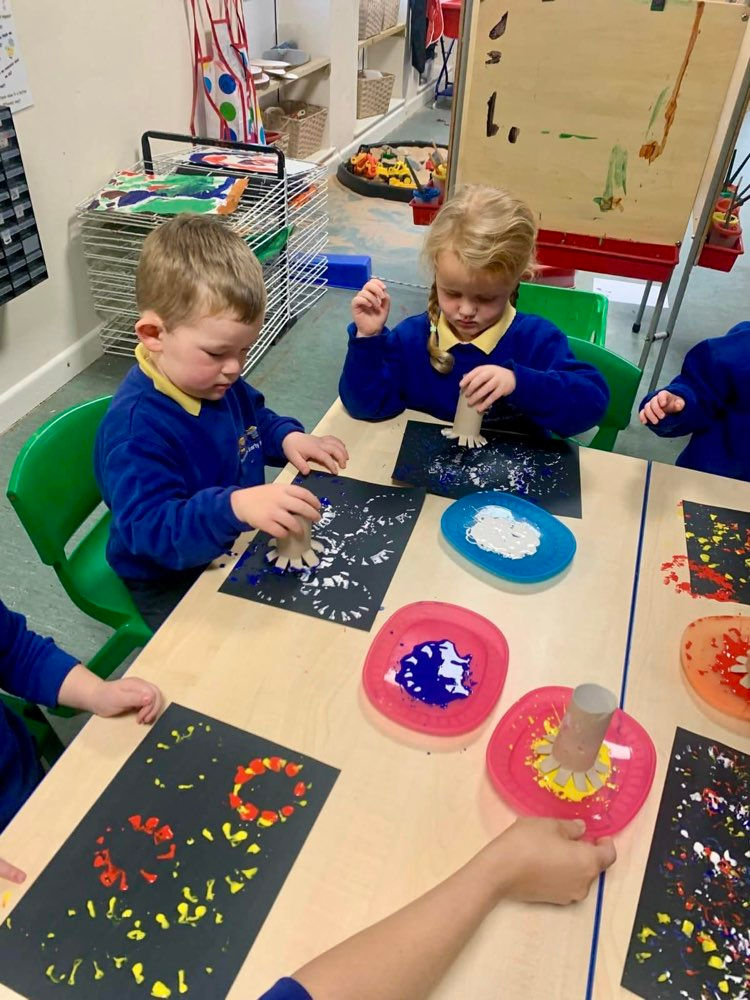
Staff and children at Cloughmills Early Years
Parents in the village say the current allocation model fails to reflect the practical reality of life in a rural community.
One local mother, Stacey Smyth, described the situation as deeply distressing for families.
“It is deeply concerning that local children are being denied places at our village nursery.
“The EA’s refusal to increase the enrolment (PAN) numbers based on a five-mile radius ignores the practical reality for families.
“Many of us have older children at the primary school; it is physically impossible to manage two different pick-up times in two different locations simultaneously.
“Furthermore, many of these children have already attended the ‘pre-pre’ program here. Moving them now would be unnecessarily unsettling after they have built bonds with the staff.
“If places aren’t made available, some parents will be forced to keep their children at home. This will have a direct negative impact on their transition to Primary 1, as they will lack the essential foundation provided by a pre-school year.
“We are fighting for a fair system that prioritises the wellbeing of the children and the stability of our community.”

Cloughmills Early Years
Her comments underline the immediate consequence now facing local families — either travel outside the village for childcare and education, or potentially keep children at home without pre-school preparation ahead of Primary 1.
Another parent said the current crisis had been building for some time.
“Last year’s issues were a warning sign that went unheeded, and now the problem has intensified. Based on the number of children currently in ‘pre-pre’, we can already see the same disaster looming for next year. This is a predictable pattern, not a fluke.
“When will the authorities finally listen and increase the numbers to meet the actual needs of our village?”
Nursery leaders warn system is “deeply flawed”
Senior figures at Cloughmills Early Years have now publicly challenged the current PAN allocation system, warning it is causing avoidable distress and undermining the future sustainability of rural early years provision.

Children having fun at Cloughmills Early Years
Chairperson Karen Forsythe said the policy for non-statutory pre-schools is failing local communities.
“The current Enrolment (PAN) allocation policy for non-statutory pre-schools is deeply flawed and is causing unnecessary distress to children and parents.
“Local settings are being restricted on the numbers they can accept year after year; consequently, local children are being turned away from their own community pre-school because the Department is not providing a sufficient number of funded places.
“This policy also creates undue stress for pre-school staff, as the lack of stability regarding student numbers leads to job insecurity and forces settings to operate with restricted funding.
“The stark reality is that children are either being forced to go without a pre-school education entirely, or parents are being pushed to pay for private provision. This contradicts the current Childcare Strategy, which identifies the provision of pre-school education to all who want it as a key priority for the Department to address.”
That concern was echoed by Jill Hyndman, Leader of Cloughmills Early Years, who said what should have been a milestone year for the setting has been overshadowed by the current dispute.
The nursery recently secured a successful ETI inspection, entered the Standardisation process for 2026/27, and saw a doubling of first-preference applications.
Instead of celebrating that progress, staff say they are now dealing with the fallout of children being turned away.
“What should have been a landmark year for our pre-school—following a successful ETI inspection, our entry into the Standardisation process for 2026/27, and a doubling of first-preference applications—has been completely overshadowed by a lack of support and understanding from the EA.
“The impact on our children, families, and staff has been profound.
“We have ‘pre-pre’ children who are already settled at Cloughmills Early Years, fully expecting to continue their education here next year. Instead, they are being forced out of their own village to unfamiliar settings, where they must begin the ‘settling-in’ process all over again.
“For many families, travelling outside the village is simply not a viable option; for these children, this policy effectively denies them their right to a pre-school place. In my 30 years in early years education, I have never had less confidence in the system or its decision-makers.”
Political pressure intensifies
The issue has now escalated politically, with multiple North Antrim representatives intervening.
DUP MLA Paul Frew said he has formally asked the EA to increase the nursery’s numbers and has also written to Education Minister Paul Givan seeking an urgent investigation.
“The decision by the Education Authority is deeply upsetting for the impacted parents and children. It seems the EA is struggling to grasp the unique needs of rural nursery units. The management and staff, who do exceptional work with these young children, are at their wits’ end due to this decision and the constant battle for sufficient places.
“I have formally asked the EA to increase the numbers allocated to this highly successful nursery. I am also representing individual families—some of whom can see the nursery from their front door, yet will now be forced to drive past it to reach an alternative setting outside the village.
“Many of these children have already spent a year at this nursery and are now being deprived of a funded place in a familiar environment. Furthermore, with siblings already attending the primary school, parents are being placed in the impossible position of trying to be in two places at once, all while trying to maintain their employment or run a business.
“It is clear the EA has got this wrong; I have written to the Education Minister to request an urgent investigation into the EA’s processes regarding this particular nursery unit.”
TUV MLA Timothy Gaston also raised the issue directly in the Northern Ireland Assembly on March 23, citing concerns for both Cloughmills Early Years and Taylorstown Cross Community Pre-school in Toomebridge.
He told the Minister:
“Mr Speaker, Minister, I have previously written to you making the case for additional nursery places at Cloughmills Early Years and Taylorstown Cross Community Pre-school, who haven’t enough places to meet this year’s demand.
“This morning, both pre-school settings had to turn away children who live within their small villages, with the PAN being based on the previous year’s intake.
“How will you support these non-statutory settings to allow them to grow to meet demand, instead of continuing to penalise them because of one year’s low intake?”
In response, Education Minister Paul Givan said he was willing to engage on specific cases but warned that increasing places in one setting could impact others.
“Well, Mr Speaker, the EA follow a process in terms of the allocation of PAN numbers, and I know from my own constituency the experience last year was not satisfactory, and there were significant adjustments that had to be made in a number of areas…
“So where there’s particular examples, I’m happy for members to raise that with me, and we can engage with EA.”
He added that Paul Frew had previously made a successful case in another North Antrim setting.
“I certainly commend Mr Frew and his work in North Antrim.”
North Antrim MP Jim Allister is also understood to have made representations to the EA.
Financial viability fears for rural settings
Beyond the immediate shortage of places, there are growing fears about the financial stability of rural early years providers.
Timothy Gaston has now written to EA Chief Executive Richard Pengelly requesting an urgent meeting on the future sustainability of both Cloughmills Early Years and Taylorstown Community Centre Preschool.
In his letter, he warned:
“The current PAN allocations for these non-statutory settings do not allow either preschool to break even, placing both in a highly precarious financial position.
“This raises serious concerns about their long-term viability and the potential loss of vital early years provision within their respective communities.”
That raises the prospect that the dispute is no longer solely about this year’s intake, but about whether community-based nursery provision in smaller villages can remain viable under the current funding model.
EA says capacity exists across wider area
In a statement issued to Love Ballymena, the Education Authority said it believes there is sufficient pre-school capacity across the wider region.
A spokesperson said:
“Pre-school admissions is a two-stage process.
“Stage 2 online applications closed on 1st April 2026, and parents will be notified of Stage 2 outcome on 19 May 2026.
“For the 2026-27 academic year, there were 1242 first-preference applications for a pre-school place, with 1480 places available, in the Causeway Coast and Glens area.
“The Education Authority is satisfied that there is sufficient capacity for all children to be placed in a pre-school setting across Northern Ireland with no requirement to increase provision.
“98.81% children were placed at end Stage 1. 92.43% children were placed in their first preference preschool setting at end of Stage 1.”
Those figures, however, do little to ease concern among Cloughmills families, who argue that capacity across a wider five-mile catchment does not solve the immediate practical difficulties of daily travel, split school runs, and removing children from a familiar setting within their own village.
What happens next
Parents are now awaiting the outcome of Stage 2 admissions on 19 May, while political pressure continues to mount on the EA and the Department of Education.
For the nine families currently left without a place in their local nursery, the coming weeks will be crucial.
At the centre of the row is a stark question for rural communities across Northern Ireland: whether availability on a regional spreadsheet is enough when local provision no longer matches how families actually live, work and raise children.
At a glance
Nine families in Cloughmills are currently without a place at the village’s only nursery setting
The Education Authority says there are sufficient places within a five-mile radius and will not increase funded numbers
Parents say travelling to other villages is unworkable, especially for families with older children already in local school
Cloughmills Early Years says it has physical capacity to take more children but cannot do so without funded places
Staff warn the current system is threatening the long-term sustainability of rural pre-school provision
MLAs Paul Frew and Timothy Gaston have both raised the issue with the Education Minister
EA says there are more than enough places available across the wider Causeway Coast and Glens area


