Surgeon warns against Causeway surgery delay as he reveals why associations intervened


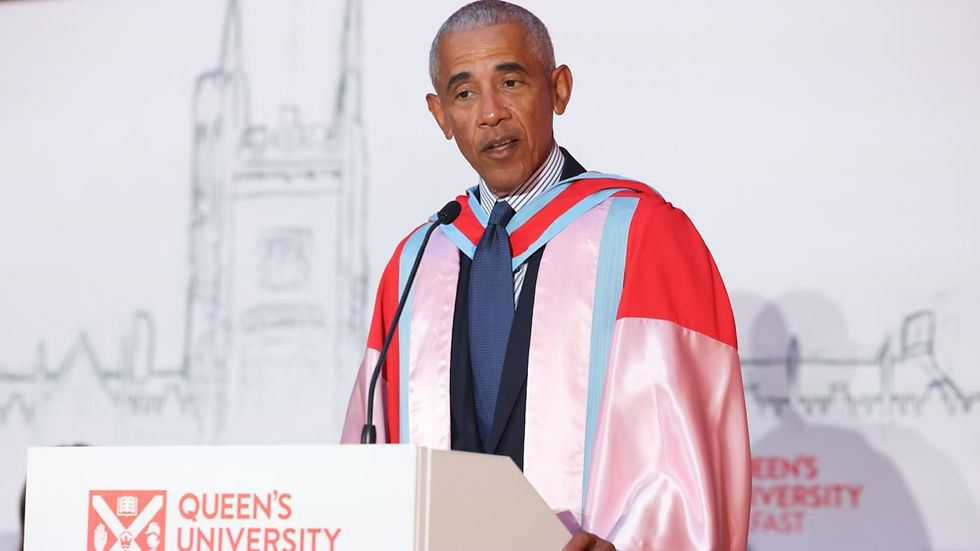
General and colorectal surgeon Damian McKay, NI representative for the Association of Coloproctology of Great Britain and Ireland (ACPGBI)
Monday 24 August 2026
A leading Northern Ireland surgeon has warned that prolonged delay over the future of emergency general surgery at Causeway Hospital would place already stretched clinical teams under increasing pressure — as he revealed that he and colleagues sought the intervention of three major surgical associations following events surrounding the resignation of former Health Minister Mike Nesbitt.
General and colorectal surgeon Damian McKay said he would be “very concerned” if a decision was allowed to drift towards the end of the current Assembly mandate, arguing that uncertainty makes it harder to plan safely and leaves teams providing the existing service under “significant strain and significant pressure”.
Speaking on BBC Radio Ulster’s Good Morning Ulster programme on Monday, Mr McKay also directly challenged some of the most prominent fears surrounding the Northern Trust proposal, insisting it is “not about hospital closures” or closing Causeway’s emergency department and saying he does not believe the proposed change would adversely affect patients’ survival chances.
His comments significantly expand on a joint intervention revealed at the weekend from three professional surgical bodies, which warned new Health Minister Robbie Butler MLA that failure to modernise surgical services risks limiting access to care and widening inequalities in patient outcomes.
However, TUV leader and North Antrim MP Jim Allister hit back following Monday’s interview, accusing Mr McKay and the Northern Trust of “talking down” to people dependent on Causeway Hospital and declaring: “My constituents need hospital services, not lectures!”
Why three surgical associations intervened
The Association of Coloproctology of Great Britain and Ireland (ACPGBI), Association of Upper Gastrointestinal Surgeons (AUGIS) and Association of Surgeons of Great Britain and Ireland (ASGBI) jointly wrote to Mr Butler warning of “recent developments in Northern Ireland that risk further delaying” implementation of the Emergency General Surgery Review.
The statement was signed by Professor Jim Khan, President of ACPGBI; Mr Andrew Smith, President of AUGIS; and Mr Christian Macutkiewicz, President of ASGBI.
The associations highlighted persistent workforce pressures, difficulties maintaining sustainable emergency services and delays accessing both emergency and elective surgical care.
They also said they were “particularly concerned that Northern Ireland continues to experience some of the poorest cancer waiting time performance in the UK, with direct consequences for patients and healthcare staff”.
Their joint statement warned:
“Failure to modernise surgical services risks perpetuating existing workforce pressures, limiting access to care and widening inequalities in patient outcomes.”
The organisations urged stakeholders to work collaboratively so recommendations arising from Northern Ireland’s Emergency General Surgery Review could progress “without further delay”.
Crucially, the associations did not specifically endorse the Northern Trust’s proposal to centralise emergency general surgery at Antrim Area Hospital. Their statement supported the wider principle of clinically led reform, saying decisions should be informed by “clinical evidence, patient outcomes, workforce sustainability and population needs”.
McKay reveals role in seeking intervention
Mr McKay, who sits on the Council of ACPGBI as its Northern Ireland representative, told Good Morning Ulster that he and colleagues had approached the professional associations for support.
He also connected the timing directly to the political events surrounding Mr Nesbitt’s resignation.
“The events that led to the resignation of our health minister were obviously concerning to the health population, and the health service within Northern Ireland, and particularly to those teams in Trusts where services are particularly stretched due to workforce issues, reliance on locums, and essentially trying to be spread too thin in terms of providing essential services,” he said.
“My position is that I’m sitting on the Council of the Association of Coloproctology of Great Britain and Ireland. I’m the representative for Northern Ireland, and I along with colleagues sought some assistance from our associations.”
Mr McKay clarified that the associations had not intervened because they felt they had “no choice”, as had been suggested in the introduction to the radio interview.
“The assistance is not about saying that we felt we had no choice,” he said.
“I think it’s more about showing that the review and reform of general surgery has been taking place throughout the UK for many, many decades now, and unfortunately in Northern Ireland we lag significantly behind, and that puts services at risk because if you have an unscheduled collapse in service, patients come to harm.”
He continued:
“If you know that service reform can lead to a more stable, safer service then we need to collectively work towards that to ensure patients get good, safe care.”
‘Patient safety needs to be the priority’
The political backdrop to the intervention is significant.
Robbie Butler was appointed Health Minister following the resignation of fellow Ulster Unionist Mike Nesbitt amid a dispute with UUP leader Jon Burrows over the proposed withdrawal of emergency general surgery from Causeway Hospital.
Mr Burrows has publicly stated his opposition to the proposed change.
Asked whether the UUP leader had effectively tied Mr Butler’s hands, Mr McKay acknowledged that politicians should represent the concerns of their constituents but said clinical evidence and patient safety must remain central.
“It’s appropriate that politicians work collaboratively with healthcare leaders to make appropriate decisions regarding health, particularly in this situation where the care and the safety of patient care needs to be the priority – that has to be the centre, that has to be the priority and that is why this statement was issued.”
Mr McKay said the three associations were offering to engage with political leaders and provide evidence explaining why they believe reform is necessary.
He welcomed Mr Butler’s appointment and argued that responsibility for health reform extended across the Executive.
“I’m delighted that we have a minister appointed and the whole Executive needs to take some collaborative ownership with regard to health,” he said.
“We’re a huge part of the budget, there’s so much that we could do within our small population but because of the failure to reform and the failure to do what has been done elsewhere in the UK we are suffering.”
Why surgeons say reform matters
Mr McKay linked the Causeway debate to wider pressures facing Northern Ireland’s health service, including waiting lists and cancer treatment.
“We repeatedly hear concern about long patient waiting lists, delays in treatment for cancer, and unfortunately it is that delay in reforming our services that contribute to those knock-on effects,” he said.
“So whenever we see the situation whereby there’s a suggestion that, that reform might be further delayed that is obviously concerning given the general situation of the health service here.”
He said the objective should be safe and sustainable care regardless of whether patients live in urban or rural communities.
“This is very much about making sure that all patients, whether you’re in a city area, a rural area, no matter where you live, we’re 1.9 million people, we want you to have good, safe, sustainable care. That’s really what the crux of this matter is.”
What is actually proposed for Causeway?
The Northern Trust board approved a recommendation in May 2025, following public consultation, to centralise emergency general surgery at Antrim Area Hospital, while the majority of planned general surgery would take place at Causeway Hospital.
The Trust has previously said Department of Health standards for emergency and elective surgery cannot be fully met without reconfiguration.
Then Northern Trust chief executive Jennifer Welsh issued a stark warning about maintaining emergency general surgery at both acute hospitals.
She said the Trust “cannot continue to provide emergency general surgery across both our acute sites. If we do not act now and plan for service change, we are facing an inevitable collapse”.
The Trust cannot implement its recommendation independently. It requires Department of Health consideration and ultimately approval by the Health Minister.
No such approval has been given.
McKay challenges fears over ED and hospital closure
Mr McKay said he was concerned about what he described as “misinformation” and “scaremongering” surrounding the proposal, including suggestions involving the North West 200, trauma services and Causeway’s emergency department.
“This has nothing to do with those issues,” he said.
Explaining what emergency general surgery means in this context, Mr McKay said:
“Emergency general surgery nowadays is essentially emergency intra-abdominal surgery and it is now really split between upper GI surgeons and lower GI surgeons and colorectal surgeons, and it is about providing the best possible care for patients that need access to either of those groups of surgeons.”
He stressed:
“It is not about hospital closures, it is not about emergency department closures, it is specifically about patients that require intra-abdominal GI surgery.”
This can include patients requiring urgent operations for conditions affecting organs within the abdomen, such as an inflamed appendix.
Mr McKay said specialist services cannot all be provided at every hospital and pointed to existing arrangements under which patients can be assessed at one hospital before being transferred for the specialist treatment they require.
“These things can’t take place in every single hospital,” he said.
“So if you think of our population, we need to have appropriate services for the volume of work that needs to be done, so that we can properly deliver care across the whole spectrum of GI surgery.”
Would patients’ survival chances be affected?
Good Morning Ulster presenter Joel Taggart directly challenged Mr McKay on whether withdrawing emergency general surgery from Causeway could adversely affect a patient’s chances of survival.
“No, I don’t believe so,” he replied.
Mr McKay pointed to Northern Ireland’s relatively small geographical size and his previous experience working in South Australia, where patients travelled much greater distances for emergency general surgery.
He acknowledged, however, that safe and timely transfers would have to be ensured.
“I’ve no doubt that we can overcome, and we do need to make sure and mitigate, and work with colleagues across the health service to ensure that patients have timely transfer,” he said.
“That can all be achieved.”
Ambulance provision and the ability of Antrim Hospital to accommodate additional patients are among the issues the Department of Health has said must be considered before any decision is taken.
Could reform mean more surgery at Causeway?
Mr McKay was also challenged over fears of a “domino effect” — that removing emergency general surgery could ultimately lead to other services being withdrawn from Causeway.
He argued instead that changing how general surgery is organised could allow Causeway to play a greater role in tackling Northern Ireland’s waiting lists.
“In terms of Causeway there is an incredible opportunity to tackle waiting lists, to have patients seen in Causeway, to do surgery in Causeway and to actually use the facility to the maximum benefit for people in the Northern Trust by explaining to them what can be delivered as a result of reform,” he said.
He contrasted planned reform with the potential consequences of an unplanned service failure, warning that “to not reform and have service collapse, can be so detrimental to the population”.
‘Very concerned’ if decision drifts towards election
One of the strongest warnings in Monday’s interview concerned the consequences of continuing uncertainty.
Mr Butler has said his priority is to take time, avoid a hasty decision and reach the right conclusion.
Asked what it would mean if no decision were made between now and the end of the current Assembly mandate, with an election due in May, Mr McKay replied: “I would be very concerned”.
He said implementing any change would itself require considerable planning, including arrangements involving other Trusts and the Northern Ireland Ambulance Service.
“When we know there is a correct thing to do, and a decision is made, then appropriate planning can take place,” he said.
“Where there is no decision made and there’s a vacuum the teams currently providing this care are under significant strain and significant pressure, and that would only worsen I believe with prolonged delay in terms of decision making.”
Mr McKay said a decision would allow the health service to work collaboratively towards “the best outcome for patients in that area in a planned way”.
Allister hits back: ‘My constituents need hospital services, not lectures’
Following the interview, TUV leader and North Antrim MP Jim Allister issued a strongly worded response under the heading “Orchestrated campaign against Causeway Hospital continues”.
“Talking down to those dependent on the services of Causeway Hospital is not the way forward,” Mr Allister said.
“This is what the Northern Trust has been doing for years. Consultants, like Mr McKay, doing the same is not helping.”
Mr Allister challenged the Trust over the outcome of its consultation, claiming that “less than 2% of respondents supported their plans”.
He also raised questions about responses submitted by Trust employees.
“Moreover, the Trust has refused to publish the breakdown of responses from the more than 140 of its staff who responded to the consultation. Nor, has it published the data it claims justifies its proposal,” he said.
Mr Allister also challenged whether Antrim Area Hospital could cope with additional emergency surgery.
“It is all very well for the Trust to positively package everything as ‘reform’, but still never address the reality that Antrim Hospital already can’t cope, without adding general emergency surgery from Causeway,” he said.
“My constituents need hospital services, not lectures!”
Department: Causeway decision has not been made
The increasingly sharp political and clinical debate comes just days after senior Department of Health officials told Stormont’s Health Committee that the Northern Trust proposal remains undecided.
Mike Farrar, interim Permanent Secretary at the Department of Health, told MLAs last Thursday that the process was “not complete”.
“No proposals have been put at this point to ministers and no decision had been taken,” he said.
“We will have to arbitrate when a business case is formally put forward to us and then there would be a recommendation to a minister and the minister will ultimately make a decision.”
Department officials said the proposed change relates to specialist emergency abdominal surgery and that most patients would continue to attend Causeway Hospital for assessment, pain relief and treatment.
Tracey McCaig, interim chief operating officer of the Strategic Planning and Performance Group (SPPG), said the Trust anticipated that transfers would involve a “small handful a week at maximum”.
Officials also explicitly ruled out plans to close Causeway Hospital’s emergency department and said there would be no change to the existing trauma network.
Mr Farrar sought to address wider fears about the hospital’s future, telling MLAs:
“A lot of the concern which is around at the moment about Causeway is that somehow this is a step towards a closure of that hospital when actually there’s investment in that hospital and its activity, levels will continue.”
He also stressed that officials would not recommend the proposal unless the eventual business case demonstrated improved health outcomes.
“When any business case is finally put forward from us to the new minister, if it does not demonstrate that there will be better health outcomes, then we would not be recommending to a minister that this is something to do,” he said.
Decision now rests with new Health Minister
Monday’s intervention brings the competing arguments facing Mr Butler into sharper focus.
Three professional surgical associations are warning that Northern Ireland cannot afford further delay to clinically led reform, while Mr McKay says prolonged uncertainty itself places pressure on the teams currently delivering emergency surgical care.
Opponents, including Mr Allister and UUP leader Jon Burrows, remain deeply concerned about removing emergency general surgery from Causeway and question the evidence, capacity at Antrim and potential longer-term consequences for services on the Coleraine site.
Importantly, ACPGBI, AUGIS and ASGBI have not specifically endorsed the Northern Trust’s proposed Causeway-Antrim configuration. Their intervention supports progress on the wider Emergency General Surgery Review and the principle that decisions should be based on clinical evidence, patient outcomes, workforce sustainability and population needs.
That distinction now sits at the heart of the decision facing Mr Butler.
The Department must first assess whether the Northern Trust’s specific proposal meets those tests — including whether Antrim has sufficient capacity, whether patient transfers can be delivered safely and whether the change would produce better health outcomes.
Until that process is completed and the new Health Minister reaches a decision, emergency general surgery at Causeway remains unchanged. But Monday’s intervention makes clear that the dispute is no longer simply about whether services should change: it is increasingly about whether delaying a decision carries risks of its own.