St Andrews ‘stitch-up’ paved way for Sinn Féin First Minister, says Lord Empey

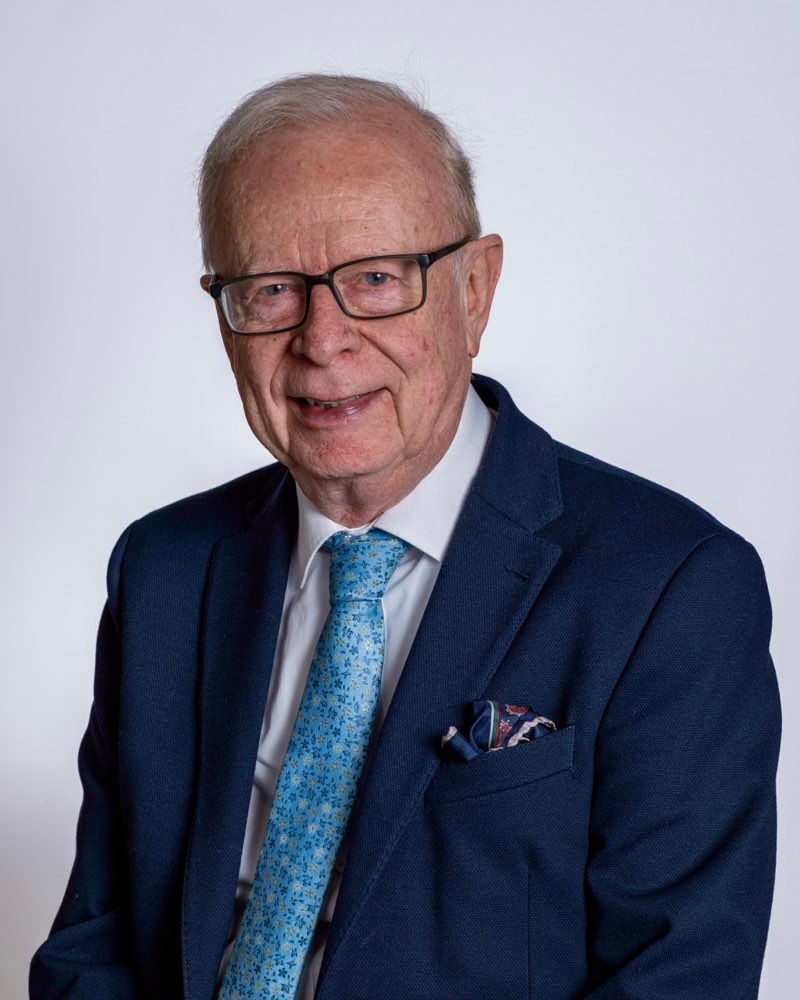
Former Ulster Unionist Party leader Lord Empey
Tuesday 13 October 2026
Twenty years after the St Andrews Agreement reshaped Northern Ireland’s power-sharing arrangements, former Ulster Unionist Party leader Lord Empey has accused the DUP of making a “strategic blunder” that ultimately allowed Sinn Féin to secure the office of First Minister.
Marking the anniversary of the October 2006 negotiations, Lord Empey claimed that changes to the rules for appointing Northern Ireland’s First Minister were designed to serve the political interests of the DUP and Sinn Féin rather than the wider unionist community.
He argued that, had the original arrangements established under the 1998 Belfast/Good Friday Agreement remained in place, a DUP Assembly member would have held the First Minister position following the 2022 Assembly election, rather than Sinn Féin’s Michelle O’Neill.
Accusations of a political stitch-up
Lord Empey described the St Andrews negotiations as a deal reached between the DUP, Sinn Féin and the British and Irish Governments without the involvement of the Ulster Unionist Party or SDLP.
He said:
“In October 2006 a deal was done at St Andrews which the Ulster Unionists strongly opposed. It was a stitch-up between Sinn Féin, the DUP and both Governments, done behind the backs of the UUP and the SDLP. While it contained a significant number of changes to the Belfast/Good Friday Agreement, the most far-reaching change was to the mechanism to be used to identify who would fill the office of First Minister.”
The former UUP leader pointed to the original power-sharing arrangements negotiated in 1998, under which the First Minister and deputy First Minister were elected together by the Assembly through a cross-community vote.
He said:
“The original mechanism, negotiated by the Ulster Unionist Party in 1998 and subsequently approved by 71.1% of those who voted in the referendum of 22nd May 1998, stipulated that the First Minister would be drawn from the largest party in the largest designation and ratified alongside the deputy First Minister in a joint resolution of the Assembly, with a cross-community vote.”
How the appointment rules changed
Under the original system, Assembly members were classified into three designations: Unionist, Nationalist and Other. The appointment process required cross-community support within the Assembly.
The St Andrews changes removed the requirement for a joint Assembly vote and introduced a system linking the nomination of First Minister to party and designation strength. Under the current rules, the largest party normally nominates the First Minister, subject to provisions concerning the largest political designation.
The First Minister and deputy First Minister remain joint and equal offices in legal authority, despite the distinction in their titles.
Lord Empey argued that the changes fundamentally altered the relationship between the Executive leadership and the Assembly.
He said:
“The designations were Unionist, Nationalist and Other, and under the Assembly process it was clear that the First and deputy First Ministers drew their power from the Assembly and were answerable to it. That process was destroyed in 2006 in favour of the mechanism we have now”
DUP criticism over Michelle O’Neill’s position
Lord Empey also challenged DUP figures who have suggested that deputy First Minister Emma Little-Pengelly could resign in a move that would bring down the joint office held with Michelle O’Neill.
Because the two positions operate jointly, the resignation of one office-holder can have consequences for the continued operation of both offices, although the process for replacing ministers is governed by statutory rules.
Lord Empey said:
“I hear DUP politicians calling for their party to remove the First Minister from office by forcing Emma Little-Pengelly to quit, thus removing Michelle O’Neill, as it is a joint position.”
He continued:
“How ironic. It is the deal at St Andrews that has resulted in Michelle O’Neill being able to hold the office of First Minister! This was done to prevent Ian Paisley from having to appear before the Assembly and be appointed to office in a joint resolution with Martin McGuinness, which would have required the DUP to vote with Sinn Féin! Ironically, they subsequently became the ‘Chuckle Brothers’ and the best of buddies”
The political calculations behind St Andrews
The 2006 agreement helped establish the conditions for the restoration of devolved government in May 2007, when DUP leader Ian Paisley became First Minister alongside Sinn Féin’s Martin McGuinness as deputy First Minister.
Lord Empey claimed that the revised appointment process was intended to allow both parties to strengthen their electoral positions without requiring the same formal joint Assembly endorsement envisaged in 1998.
He said:
“The rules were changed so that the First Minister would be drawn from the largest party and not the largest designation, and the Assembly no longer had to pass a joint resolution to appoint them to office. The DUP and SF saw this as their big chance. Paisley campaigned in elections on the basis that ‘if you don’t vote for me, you get Martin McGuinness as First Minister’, and SF campaigned on the basis that ‘if you vote for McGuinness, we can put Paisley out’”
His criticism centres on the long-term political consequences of a system that allowed Sinn Féin to secure the First Minister nomination by becoming the Assembly’s largest party.
The consequences of the 2022 Assembly election
Sinn Féin emerged from the May 2022 Assembly election with 27 seats, ahead of the DUP on 25, making it the largest party at Stormont for the first time.
Although unionist-designated MLAs collectively outnumbered nationalist-designated MLAs, Sinn Féin’s position as the largest individual party entitled it to nominate the First Minister under the revised arrangements.
Michelle O’Neill subsequently took office in February 2024, when the Northern Ireland Executive was restored following a two-year suspension of devolved government.
Lord Empey said:
“Well, this has come back to bite not only the DUP but all of unionism. At the last Assembly election, the unionist designation was larger than the nationalist designation, and if the rules that the UUP negotiated in 1998 had been left alone, a DUP Assembly Member would have been First Minister and not Michelle O’Neill.”
His argument concerns which party would have been entitled to nominate the First Minister under the earlier system. The original arrangements would still have required the First Minister and deputy First Minister to secure the necessary cross-community Assembly support.
Call for DUP to accept responsibility
Concluding his criticism, Lord Empey called on the DUP to acknowledge its role in negotiating changes that he believes weakened unionism’s position at Stormont.
He said:
“It’s time for the DUP to take ownership of yet another strategic blunder, as it was they who created the conditions whereby Sinn Féin can hold the top post in the current Assembly. It was all about serving their own interests and not those of wider unionism.”
The anniversary highlights a continuing dispute within unionism over the political legacy of St Andrews, two decades after the agreement helped pave the way for restored power-sharing.
While the First Minister and deputy First Minister exercise equal powers, the political significance attached to the First Minister title remains central to Lord Empey’s criticism — and to the wider debate over how Northern Ireland’s institutions should operate.