


Snus warning issued across Mid and East Antrim as hidden use in football raises health concerns
- Love Ballymena

- May 3
- 3 min read
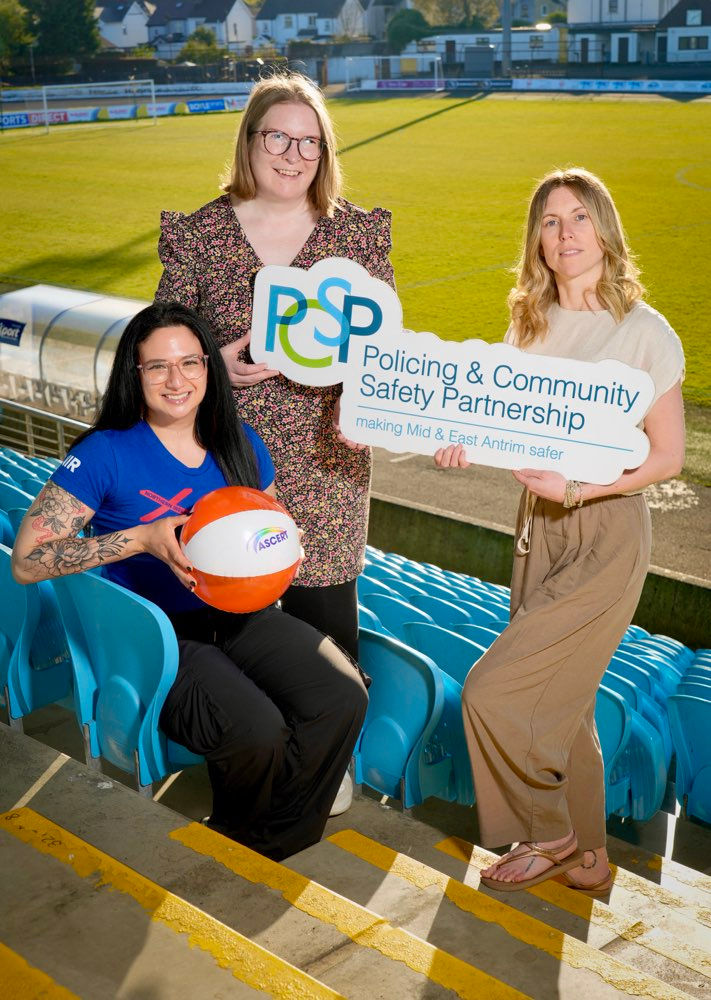
Pictured at the first SNUS Awareness training event at Ballymena Showgrounds are Chair of Mid and East Antrim Policing and Community Safety Partnership (MEA PCSP), Councillor Lauren Gray, alongside Elena Brewer, MPH Training Services Officer at ASCERT, and Chantal Ford, Irish Football Association Safeguarding and Welfare Manager.
The growing use of snus and nicotine pouches among footballers and young people in Mid and East Antrim has prompted a targeted community safety response, with agencies warning the products are far from harmless and can carry serious health risks.
A new partnership between the Mid and East Antrim Policing and Community Safety Partnership (MEA PCSP), the Irish Football Association and ASCERT is now focusing on raising awareness, challenging myths and directing users towards support services.
Although widely perceived as a discreet alternative to smoking, snus remains illegal to sell in the UK, and officials say its increasing presence in sport - particularly football - is cause for concern.
Hidden use in sport driving concern
Snus typically comes in small, teabag-like pouches containing tobacco, flavourings and additives, placed between the upper lip and gum. Unlike other smokeless tobacco, it does not require spitting, making it easy to use unnoticed during training sessions and matches.
That discreet nature is believed to be fuelling its uptake among players, with reports suggesting it is being used for relaxation, stress management, social bonding, weight control and perceived performance benefits.
However, evidence that nicotine improves athletic performance is mixed, with experts concluding it is just as likely to harm performance as enhance it.
In response, MEA PCSP hosted a dedicated information and advice evening bringing together local clubs, coaches, parents, players and community representatives to address the issue directly.
Health risks extend beyond the pitch
Officials say the dangers are both immediate and long-term. Short-term effects can include anxiety, nausea, headaches, poor sleep, chest tightness and increased heart rate and blood pressure.
Longer-term risks are more serious, ranging from cardiovascular disease and gum disease to delayed wound healing, nicotine dependence and withdrawal. Tobacco-based snus also carries an increased risk of cancer.
Nicotine use is also closely linked to mental health challenges. Users often turn to it to cope with pressure or anxiety, but it can worsen sleep patterns, heighten anxiety symptoms and reinforce dependence, creating a cycle that undermines wellbeing.
In a sporting context, additional risks include reduced sleep and appetite, negatively affecting recovery, alongside increased anxiety or over-relaxation. Poor product regulation can also lead to potential anti-doping rule violations.
Community safety focus on young people
Chair of Mid and East Antrim PCSP, Councillor Lauren Gray, said the issue had been identified through the partnership’s Drugs and Alcohol Steering Group as a growing concern across the borough.
She said the initiative highlights that snus and nicotine pouch use is not limited to sport but represents a wider community safety issue, particularly affecting young people and young men, adding that the partnership’s work is focused on prevention, early intervention and providing training opportunities through collaborative networks.
The steering group brings together statutory, community and voluntary organisations to address drug and alcohol issues, with the latest programme aiming to improve awareness and encourage informed decision-making.
Shift away from punishment towards support
The campaign is urging sports organisations to prioritise education and support rather than punitive measures, warning that outright bans risk driving use underground and discouraging individuals from seeking help.
Instead, recommended approaches include raising awareness of health risks, challenging the perception that “everyone is using snus”, promoting healthier coping strategies for stress and performance pressure, and helping young players develop refusal skills.
Normalising help-seeking behaviour and clearly signposting support services are also central to the strategy.
ASCERT training officer Elena Brewer said education and open conversation are key to helping people make informed choices, emphasising that supportive, non-punitive approaches can better connect users with the help they need.
Support services available across Northern Ireland
Support is available through organisations including ASCERT, NIDACTS and Family Support NI, offering advice, treatment pathways and wider family and wellbeing support.
For more information about this community safety initiative or PCSP programmes, members of the public can contact pcsp@midandeastantrim.gov.uk.
The partnership says tackling the rise in snus use will depend on continued awareness, early intervention and ensuring those affected feel able to seek support without stigma.
At a glance
Snus and nicotine pouch use is rising, particularly in football
It is illegal to sell snus in the UK
Products are discreet and can be used during matches and training
Short-term effects include anxiety, nausea and increased heart rate
Long-term risks include cardiovascular disease, addiction and cancer
Nicotine use can worsen mental health and sleep patterns
Experts say nicotine may harm rather than improve performance
Agencies are urging education and support instead of punishment
Help available via ASCERT, NIDACTS and Family Support NI
Contact: pcsp@midandeastantrim.gov.uk


