


Plastic bottles turned into Parkinson’s drug in breakthrough that could reshape medicine and recycling

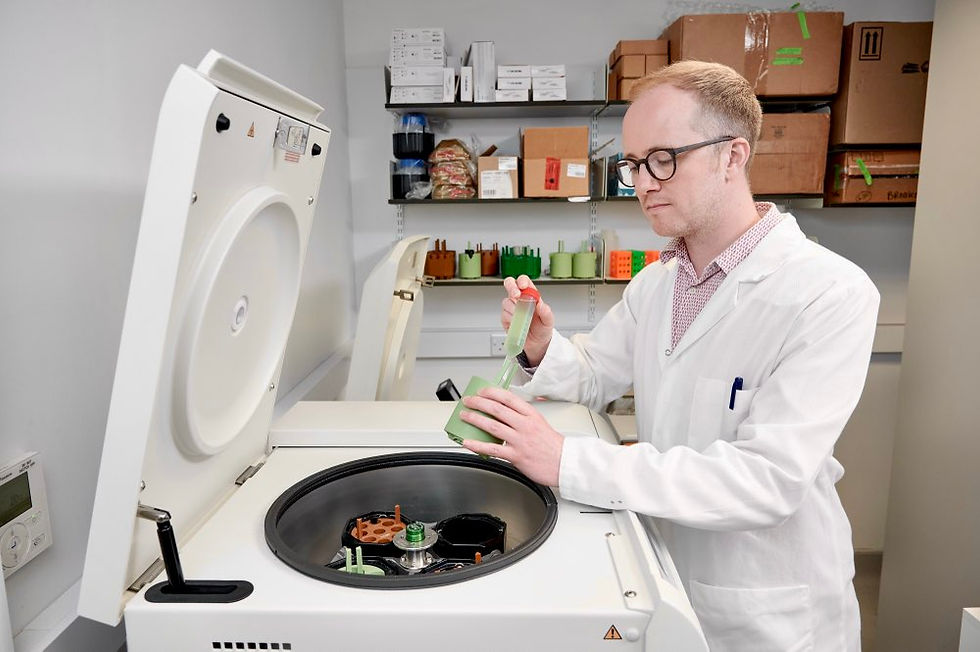
Professor Stephen Wallace harvesting engineered bacteria for analysis. (Photo: Edinburgh Innovations)
A team of UK scientists has developed a pioneering method to turn discarded plastic bottles into a key drug used to treat Parkinson’s disease, in a breakthrough that could transform both pharmaceutical manufacturing and global recycling efforts.
Researchers at the University of Edinburgh have successfully engineered bacteria to convert post-consumer plastic into L-DOPA, a frontline medication used to manage the neurological condition.
The study marks the first time a biological process has been designed to transform plastic waste directly into a therapeutic drug.
Turning waste into medicine
The process centres on polyethylene terephthalate - or PET - a widely used plastic found in food and drink packaging.
Around 50 million tonnes of PET waste are produced globally each year, much of which is not fully recycled and instead ends up in landfill, incineration, or the natural environment.
In the new approach, scientists first break PET down into its chemical components, including terephthalic acid. These molecules are then fed into engineered E. coli bacteria, which convert them into L-DOPA through a series of biological reactions.
Researchers say the method offers a new way to recover and reuse carbon from plastic waste that would otherwise be lost.
Reducing reliance on fossil fuels
Traditional pharmaceutical production depends heavily on finite fossil fuel resources such as oil and gas.
By contrast, the new technique uses waste material as its starting point, potentially offering a more sustainable route to producing essential medicines.
The research team highlighted the urgent need for improved recycling solutions for PET plastics, noting that existing systems remain inefficient and continue to contribute to global pollution.
Beyond Parkinson’s treatment
While the study focuses on L-DOPA, scientists say the same approach could be used to create a wide range of high-value products from plastic waste.
These could include flavourings, fragrances, cosmetics, and industrial chemicals, opening the door to a new bio-upcycling industry built on converting waste into usable materials.
The team has already demonstrated the production and isolation of L-DOPA at preparative scale and is now working to advance the technology towards industrial use.
This next stage will focus on improving efficiency, scaling production, and assessing the environmental and economic performance of the process.
Backed by major UK investment
The findings, published in Nature Sustainability, were supported by UK Research and Innovation and the Industrial Biotechnology Innovation Centre, with Impact Solutions acting as an industry partner.
The work was carried out at the £14 million Carbon-Loop Sustainable Biomanufacturing Hub, which aims to transform UK manufacturing by converting industrial waste into sustainable chemicals and materials.
The hub is backed by the Engineering and Physical Sciences Research Council, part of UKRI, with additional support from Edinburgh Innovations, the University of Edinburgh’s commercialisation service.
“Just the beginning”
Professor Stephen Wallace, of the University of Edinburgh’s School of Biological Sciences, who led the study, said:
“This feels like just the beginning. If we can create medicines for neurological disease from a waste plastic bottle, it’s exciting to imagine what else this technology could achieve.
“Plastic waste is often seen as an environmental problem, but it also represents a vast, untapped source of carbon. By engineering biology to transform plastic into an essential medicine, we show how waste materials can be reimagined as valuable resources that support human health.”
Experts involved in the project say the breakthrough highlights how engineering biology could help tackle environmental challenges while delivering practical benefits for healthcare and industry.
With further development now under way, researchers are aiming to scale the process for real-world manufacturing, raising the prospect of a future where plastic waste becomes a valuable raw material for life-saving treatments.
At a glance
• Scientists have turned plastic bottles into a Parkinson’s drug using bacteria
• The method converts PET plastic into L-DOPA, a frontline treatment
• Around 50 million tonnes of PET waste are produced globally each year
• The process could reduce reliance on fossil fuels in drug production
• Research was led by the University of Edinburgh and published in Nature Sustainability
• The project is backed by UKRI and the £14 million Carbon-Loop hub
• Scientists are now working to scale the technology for industrial use
• The approach could also be used to create cosmetics, chemicals and fragrances


