


Antrim Area busiest A&E in Northern Ireland as 1,653 patients endure 12-hour waits
- Love Ballymena

- 4 hours ago
- 12 min read
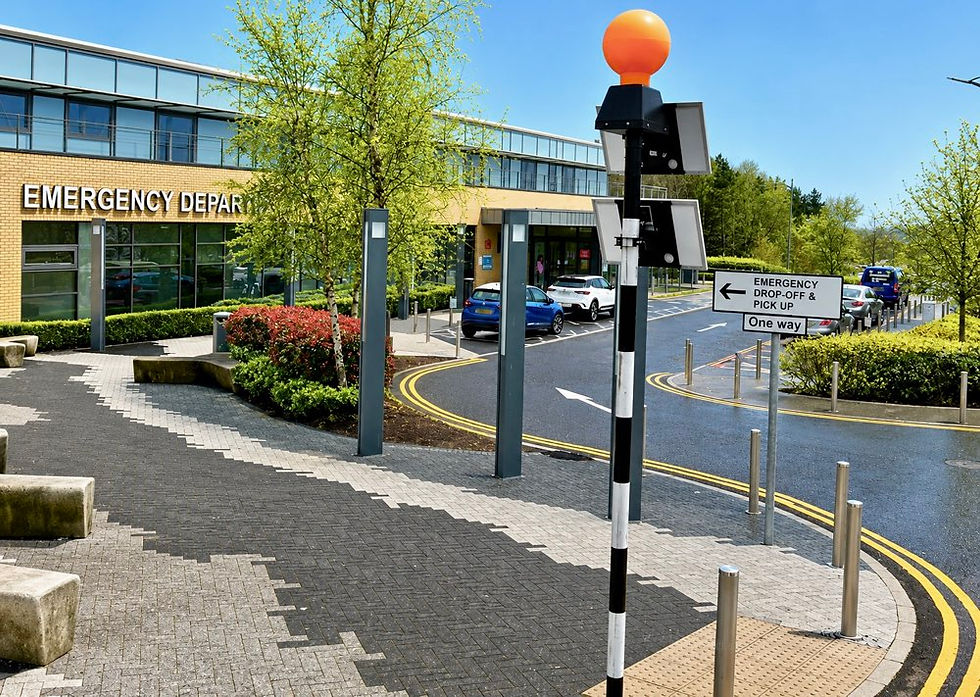
Antrim Area Hospital Emergency Department
Wednesday 12 August 2026
Antrim Area Hospital was the busiest major emergency department in Northern Ireland in June, dealing with 8,186 attendances in a single month as new figures expose the continuing scale of pressure on emergency care.
The hospital saw an average of around 273 attendances every day — equivalent to more than 11 patients arriving every hour, 24 hours a day — while 1,653 people spent more than 12 hours in its emergency department.
Together with Causeway Hospital, the Northern Health and Social Care Trust’s two Type 1 emergency departments dealt with 12,675 attendances during June.
Of those, 2,218 patients — around one in six — spent more than 12 hours in emergency care, despite a Department of Health target that no patient should wait longer than 12 hours.
The figures also reveal a more complicated picture than the headline numbers alone suggest. Performance at Antrim improved significantly between April and June on several measures, while Causeway managed increased demand compared with last year alongside fewer 12-hour waits.
Busiest major emergency department in NI
Antrim Area recorded more attendances than any other Type 1 emergency department in Northern Ireland during June.
Its 8,186 attendances put it ahead of Craigavon Area Hospital, with 7,104, the Royal Victoria Hospital, with 6,995, and the Ulster Hospital, with 6,870.
Causeway recorded another 4,489 attendances, equivalent to almost 150 patients a day.
Combined, Antrim and Causeway handled approximately 23% of Northern Ireland’s 54,572 Type 1 emergency department attendances during June — close to one in every four patients using the region’s major EDs.
Demand increased at both Northern Trust hospitals compared with June 2025. Antrim Area recorded 8,186 attendances, up 188 from 7,998 — an increase of 2.4%.
Causeway saw the sharper rise, with attendances increasing by 251, from 4,238 to 4,489 — up 5.9%.
Combined, the two hospitals dealt with 12,675 attendances compared with 12,236 a year earlier — an additional 439 patients and an increase of 3.6%.
That means Causeway’s rate of growth was more than twice that recorded at Antrim, although Antrim remained by far the busier department.
Across all emergency departments in Northern Ireland, attendances increased 4.1% year-on-year, meaning the combined rise at Antrim and Causeway was slightly below the regional rate.
More than 2,200 waits beyond 12 hours
The scale of the longest waits is particularly stark.
At Antrim Area, 1,653 patients spent more than 12 hours in the emergency department during June. At Causeway, the figure was 565.
Combined, that means 2,218 people experienced a stay exceeding 12 hours — an average of approximately 74 patients every day across the two departments.
At Antrim, those patients represented approximately 20.2% of attendances — around one in five.
At Causeway, the equivalent figure was 12.6% — around one in eight.
Across both hospitals, approximately 17.5% — or one in six — of all attendances lasted beyond 12 hours.
The Department of Health target states that no patient attending an emergency department should wait longer than 12 hours, while a separate target requires 95% of patients to be treated and discharged or admitted within four hours.
Neither hospital came close to meeting those standards.
Long waits falling since April
There has, however, been a notable improvement during the first quarter of 2026/27.
At Antrim, the number of patients spending more than 12 hours in ED fell from 1,959 in April to 1,886 in May and 1,653 in June.
That represents 306 fewer 12-hour waits between April and June — a reduction of approximately 15.6%.
Causeway followed the same direction, falling from 695 in April to 605 in May and 565 in June, a reduction of 130 cases, or 18.7%.
That is a reduction of 436, or 16.4%, in two months.
However, the year-on-year comparison is different at Antrim. Its 12-hour waits increased from 1,598 in June 2025 to 1,653 this June, a rise of 55 or approximately 3.4%.
Causeway moved in the opposite direction. Despite handling 251 more attendances than a year earlier, its 12-hour waits fell from 599 to 565, a reduction of 5.7%.
The contrast becomes even clearer when changes in demand are taken into account. At Antrim, attendances increased by 2.4% year-on-year while 12-hour waits rose by approximately 3.4%. At Causeway, attendances increased much more sharply — by 5.9% — yet 12-hour waits fell by 5.7%.
In other words, Causeway handled substantially more patients than a year earlier while reducing its longest waits, whereas at Antrim the number of 12-hour waits increased at a slightly faster rate than overall attendances.
Causeway ahead on four-hour performance
There was also a significant difference between the two Northern Trust hospitals in the proportion of patients completing their ED journey within four hours.
At Antrim, 33.1% were treated and discharged or admitted within four hours in June.
At Causeway, the figure was considerably higher at 45.3%.
The Type 1 figure across Northern Ireland was 32.5%, meaning Antrim was close to the regional performance for major EDs while Causeway was substantially above it — although still less than half of the official 95% target.
Both hospitals recorded small improvements compared with June 2025.
Antrim increased from 32.6% to 33.1%, while Causeway rose from 44.6% to 45.3%.
Antrim’s month-to-month improvement was more pronounced, moving from 30.5% in April and 30.0% in May to 33.1% in June.
Causeway edged in the other direction during the quarter, from 46.9% in April to 45.9% in May and 45.3% in June — although its number of patients experiencing the very longest waits was falling at the same time.
Almost 15-hour median stay for admitted Causeway patients
For patients sick enough to require admission to hospital, the figures reveal much longer stays.
The median total time spent in Antrim Area’s emergency department before admission was 13 hours 30 minutes in June.
At Causeway, it was even longer at 14 hours 59 minutes.
Put another way, half of subsequently admitted patients at Antrim spent at least around 13½ hours in ED, while at Causeway the midpoint was almost 15 hours.
Antrim’s position nevertheless improved substantially during the quarter.
Its median time for admitted patients fell from 17 hours 2 minutes in April to 15 hours 51 minutes in May and 13 hours 30 minutes in June — an improvement of 3 hours 32 minutes in two months.
Causeway improved from 20 hours 45 minutes in April to 14 hours 42 minutes in May, before increasing slightly to 14 hours 59 minutes in June.
That still left its June median 5 hours 46 minutes shorter than in April.
Some admitted patients remained in ED for days
The figures at the extreme end of the waiting-time distribution are more striking.
For admitted patients at Antrim, the 95th-percentile total ED time was 67 hours 49 minutes in June. At Causeway it was 77 hours 30 minutes.
In practical terms, 95% had left ED by those points — meaning the remaining 5% had stays longer than approximately two days and 20 hours at Antrim, and three days and five hours at Causeway.
Antrim showed sustained improvement on this measure, falling from 80 hours 19 minutes in April to 72 hours 46 minutes in May and 67 hours 49 minutes in June.
Causeway’s figures were much more volatile: 87 hours 59 minutes in April, 53 hours 26 minutes in May and 77 hours 30 minutes in June.
Causeway quicker for patients discharged home
There was another significant difference between the hospitals among patients who did not require admission.
The median ED stay for patients discharged home was 5 hours 5 minutes at Antrim, compared with four hours at Causeway.
Antrim was exactly in line with the Northern Ireland Type 1 median of 5 hours 5 minutes, while Causeway was more than an hour quicker.
At the 95th percentile, discharged patients spent up to 19 hours 34 minutes at Antrim, compared with 13 hours 41 minutes at Causeway.
Antrim treating a more acute mix of patients
The figures also provide important context for direct comparisons between the hospitals.
Antrim Area was not only considerably busier — its patients were substantially more likely to be classified in the more urgent clinical categories.
In June, 21.9% of Antrim patients were Level 1 or 2 — immediate or very urgent — with another 58.5% classified Level 3, or urgent.
That means approximately 80.4% were in Levels 1 to 3.
Just 19.7% were in the Level 4 or 5 standard and non-urgent categories.
At Causeway, 13.3% were Level 1 or 2, 41.2% Level 3 and 45.5% Level 4 or 5.
Around 54.5% of Causeway’s attendances were therefore Levels 1 to 3, compared with more than four-fifths at Antrim.
Causeway’s 13.3% Level 1/2 proportion was the lowest among Northern Ireland’s Type 1 emergency departments.
Its patient mix has also changed since June 2025, when 17.3% were Level 1/2. That has fallen four percentage points in a year, while its Level 3 share increased from 37.9% to 41.2%.
Antrim’s acuity profile remained comparatively stable.
More than 1,700 Antrim patients referred by GPs
Another striking feature of Antrim’s workload is the number of patients referred to the emergency department by GPs.
There were 1,744 GP-referred attendances at Antrim during June, representing 21.3% of all attendances — the highest proportion recorded by any Type 1 emergency department in Northern Ireland.
Across Northern Ireland, the figure was 11.5%, making Antrim’s proportion almost twice the regional rate.
Causeway recorded 557 GP-referred attendances, or 12.4%.
Together, the Northern Trust’s two Type 1 departments therefore received 2,301 GP-referred attendances in one month.
The Department has cautioned, however, that GP referral data has been affected by the introduction of the encompass electronic patient record and is undergoing validation.
Treatment starting faster in June
Both Northern Trust hospitals recorded their strongest performance of the quarter in June for beginning treatment within two hours of triage.
The Department’s target is 80%.
Antrim improved from 42.3% in April and 38.2% in May to 48.0% in June.
Causeway rose from 56.3% to 55.4% and then 60.0%.
Median time between triage and treatment at Antrim fell from 2 hours 49 minutes in May to 2 hours 6 minutes in June, an improvement of 43 minutes in one month.
It was also 14 minutes faster than June 2025, when the median was 2 hours 20 minutes.
Causeway’s June median was substantially shorter at 1 hour 36 minutes.
At the 95th percentile, the wait from triage to treatment was 8 hours 42 minutes at Antrim and 5 hours 5 minutes at Causeway.
Triage itself remains relatively quick
Despite the much longer waits later in patients’ journeys, initial assessment was comparatively fast at both hospitals.
The median time between arrival and triage in June was 13 minutes at Antrim and 12 minutes at Causeway, against a clinical quality indicator of 15 minutes.
At the 95th percentile, the figures were 47 minutes at Antrim and 40 minutes at Causeway.
Both improved during the quarter.
Antrim’s 95th-percentile triage time fell from 59 minutes in April to 58 in May and 47 in June, while Causeway improved from 54 to 50 and then 40 minutes.
The figures suggest that much of the severe delay experienced by patients develops after initial assessment rather than simply while waiting to be triaged at the front door.
860 patients left before treatment was complete
Another 860 people left Antrim and Causeway emergency departments before their treatment was completed during June.
At Antrim, 666 patients — 8.1% of attendances — left before completion, compared with 510, or 6.4%, in June 2025.
That represents 156 additional patients, or a 30.6% increase in the number leaving before treatment was complete.
There was some improvement compared with May, when 757 patients, or 9.0%, left Antrim before completion.
Causeway moved in the opposite direction year-on-year, falling from 224 patients, or 5.3%, to 194, or 4.3%.
Unexpected reattendance within seven days stood at 3.1% at Antrim — 254 patients — and 4.9% at Causeway — 218 patients.
Both rates were lower than a year earlier. Antrim fell from 3.3% to 3.1%, while Causeway dropped more substantially from 6.0% to 4.9%.
‘Our Emergency Departments are in a year-round crisis’
The pressures extend far beyond the Northern Trust.
Across Northern Ireland, 71,018 people attended emergency departments in June, up 2,778 or 4.1% on June 2025.
Of those, 54,572 — 76.8% — attended Type 1 departments, while 16,446 — 23.2% — attended Type 3 services.
A total of 11,605 patients waited longer than 12 hours, up from 11,133 in June last year.
The Royal College of Emergency Medicine said June’s figure was the worst for the month since records began, warning that overcrowding was no longer confined to traditional winter pressures.
Dr Michael Perry, RCEM Northern Ireland Vice President, said:
“Our Emergency Departments in Northern Ireland are in a year-round crisis.
“Gone are the days when summer was the ‘easier’ time of year in A&E. As today’s figures show, our services are running hot throughout the year. It is unsustainable.
“The vast majority of our patients are waiting longer than they should be. For many, that is a significant cause of worry. For a not insignificant number – these long waits pose a threat to their life.
“Patients line our corridors, being treated in every corner of the ED. Meanwhile, staff are doing everything they can to keep up with demand that is magnitudes higher than we would have typically expected at this time of year, all the while trying their best to deliver excellent care.”
RCEM points to patient flow
The College argues that attendance levels alone do not explain the scale of overcrowding and points instead to problems moving patients through hospitals and discharging those medically ready to leave.
Across the full April-to-June quarter, Northern Ireland’s emergency departments recorded 210,660 attendances — just 114 fewer, or 0.1%, than the corresponding quarter last year.
RCEM has called for a system-wide approach to reducing delayed discharges, improving social care arrangements and ending the treatment of patients in corridors.
Dr Perry added:
“We need the policymakers to make improving patient flow a priority. Easing congestion at the back door of our hospitals will help us in the front.
“We cannot go on like this, and I worry what winter has in store.”
For Antrim and Causeway, the latest figures therefore tell two stories at once. Several important waiting-time measures improved between April and June, and Causeway achieved some notable year-on-year gains despite rising demand.
But the scale of the remaining pressure is difficult to escape: 12,675 people attended the Northern Trust’s two major emergency departments in June and 2,218 of them spent more than 12 hours there.
For those ultimately requiring a hospital bed, the median emergency department stay was 13½ hours at Antrim Area and almost 15 hours at Causeway — illustrating why improving the movement of patients out of emergency departments remains central to tackling Northern Ireland’s wider hospital pressures.
Important note on the statistics
The Department of Health says these figures are currently classed as “official statistics in development” during implementation and stabilisation of its new encompass electronic patient record system.
Encompass went live in the Northern Trust on 7 November 2024.
The Department says caution should be exercised when using the data during the transition, but considers the statistics a meaningful representation of what they measure and of sufficient quality for publication and use.
FULL DATA BREAKDOWN — ANTRIM AREA, CAUSEWAY AND NORTHERN IRELAND
Attendances — June 2026
Antrim Area: 8,186, compared with 7,998 in June 2025 — +188 / +2.4%
Causeway: 4,489, compared with 4,238 — +251 / +5.9%
Combined: 12,675, compared with 12,236 — +439 / +3.6%
Antrim daily average: approximately 273 attendances
Causeway daily average: approximately 150 attendances
Combined daily average: approximately 423 attendances
Combined share of NI Type 1 activity: approximately 23.2%
NI all ED attendances: 71,018 — +4.1% year-on-year
NI Type 1 attendances: 54,572 — +5.2% year-on-year
Longest waits — over 12 hours
Antrim: 1,653 — approximately 20.2%, or one in five attendances
Causeway: 565 — approximately 12.6%, or one in eight
Combined: 2,218 — 17.5%, or around one in six
Combined daily average: approximately 74 patients
NI: 11,605 waits exceeding 12 hours
Quarter trend
Antrim: 1,959 → 1,886 → 1,653, April to June; -15.6%
Causeway: 695 → 605 → 565; -18.7%
Combined: 2,654 → 2,491 → 2,218; -16.4%
Year-on-year
Antrim: 1,598 → 1,653, up 55 or approximately 3.4%
Causeway: 599 → 565, down 34 or approximately 5.7%
Demand versus 12-hour waits
Antrim: attendances +2.4% | 12-hour waits +3.4%
Causeway: attendances +5.9% | 12-hour waits -5.7%
Four-hour performance
Target: 95%
Antrim: 33.1%
Causeway: 45.3%
NI Type 1: 32.5%
Antrim quarter: 30.5% → 30.0% → 33.1%
Causeway quarter: 46.9% → 45.9% → 45.3%
Year-on-year
Antrim: 32.6% → 33.1%
Causeway: 44.6% → 45.3%
Admitted patients — median total ED stay
Antrim: 13h 30m
Causeway: 14h 59m
NI overall: 13h 31m
NI Type 1: 13h 45m
Quarter trend
Antrim: 17h 02m → 15h 51m → 13h 30m
Improvement April–June: 3h 32m
Causeway: 20h 45m → 14h 42m → 14h 59m
Improvement April–June: 5h 46m
Admitted patients — 95th percentile
Antrim: 67h 49m
Causeway: 77h 30m
Antrim: 80h 19m → 72h 46m → 67h 49m
Causeway: 87h 59m → 53h 26m → 77h 30m
Discharged patients — median total ED stay
Antrim: 5h 05m
Causeway: 4h 00m
NI Type 1: 5h 05m
95th percentile
Antrim: 19h 34m
Causeway: 13h 41m
Patient acuity
Antrim
Level 1/2 immediate/very urgent: 21.9%
Level 3 urgent: 58.5%
Level 4/5 standard/non-urgent: 19.7%
Levels 1–3 combined: approximately 80.4%
Causeway
Level 1/2: 13.3%
Level 3: 41.2%
Level 4/5: 45.5%
Levels 1–3 combined: 54.5%
Causeway year-on-year shift
Level 1/2: 17.3% → 13.3%
Level 3: 37.9% → 41.2%
Level 4/5: 44.8% → 45.5%
GP referrals
Antrim: 1,744 / 21.3% — highest Type 1 proportion in NI
Causeway: 557 / 12.4%
Combined: 2,301
NI: 11.5%
Antrim’s proportion was therefore approximately 1.85 times the NI rate.
Treatment within two hours of triage
Target: 80%
Antrim: 48.0%
Causeway: 60.0%
NI all applicable EDs: 55.9%
Antrim: 42.3% → 38.2% → 48.0%
Causeway: 56.3% → 55.4% → 60.0%
Median triage-to-treatment time
Antrim
April: 2h 33m
May: 2h 49m
June: 2h 06m
Improvement May–June: 43 minutes
June 2025: 2h 20m
Year-on-year improvement: 14 minutes
Causeway
April: 1h 41m
May: 1h 42m
June: 1h 36m
95th percentile
Antrim: 8h 42m
Causeway: 5h 05m
Arrival to triage
Median
Antrim: 13 minutes
Causeway: 12 minutes
NI: 14 minutes
Clinical quality indicator: 15 minutes
95th percentile
Antrim: 47 minutes
Causeway: 40 minutes
Quarter trend
Antrim: 59m → 58m → 47m
Causeway: 54m → 50m → 40m
Left before treatment was complete
Antrim: 666 / 8.1%
Causeway: 194 / 4.3%
Combined: 860 patients
Year-on-year
Antrim: 510 → 666, +156 / +30.6%
Antrim percentage: 6.4% → 8.1%
Causeway: 224 → 194, -30 / -13.4%
Causeway percentage: 5.3% → 4.3%
Unplanned seven-day reattendance
Antrim: 254 / 3.1%
Causeway: 218 / 4.9%
Year-on-year
Antrim: 3.3% → 3.1%
Causeway: 6.0% → 4.9%
Wider Northern Ireland picture
June ED attendances: 71,018
Increase from June 2025: 2,778 / 4.1%
Type 1 attendances: 54,572 / 76.8%
Type 3 attendances: 16,446 / 23.2%
April–June attendances: 210,660
Year-on-year quarterly change: -114 / -0.1%
June waits over 12 hours: 11,605
June 2025: 11,133
Increase: 472 / 4.2%
Left before treatment complete: 6.8%, up from 6.5%
GP referrals: 11.5%, up from 11.2%
Treatment within two hours: 55.9%, down from 58.6%
Median arrival-to-triage: 14 minutes
Median triage-to-treatment: 1h 38m
Type 1 discharged median stay: 5h 05m
Type 1 admitted median stay: 13h 45m
Longest Type 1 median arrival-to-admission: Altnagelvin — 19h 28m


