


‘We kept being told everything was fine’: Ballymena mum shares daughter’s cancer battle
- Love Ballymena

- May 12
- 6 min read

Charleigh-Rose Havelin
A Ballymena mother has spoken of the moment her nine-year-old daughter was rushed to Belfast by blue-light ambulance after weeks of headaches and relentless vomiting were finally revealed to be an aggressive brain tumour.
For months, Jenna Havelin says her daughter Charleigh-Rose became increasingly unwell as the family desperately searched for answers, never imagining the little girl’s symptoms were being caused by medulloblastoma — the most common malignant brain tumour found in children.
Now, after emergency eight-hour brain surgery, 30 rounds of radiotherapy and chemotherapy still ahead, Jenna has launched a Facebook page called ‘My Little Warrior Charleigh-Rose’ to share her daughter’s journey and raise awareness of childhood cancer symptoms.
“I just feel more awareness needs to be created for kids going through this,” Jenna said.
“Sometimes our health service seems to think kids are invincible, so by the time you get a diagnosis, you’re at crisis point.”
A happy childhood turned upside down
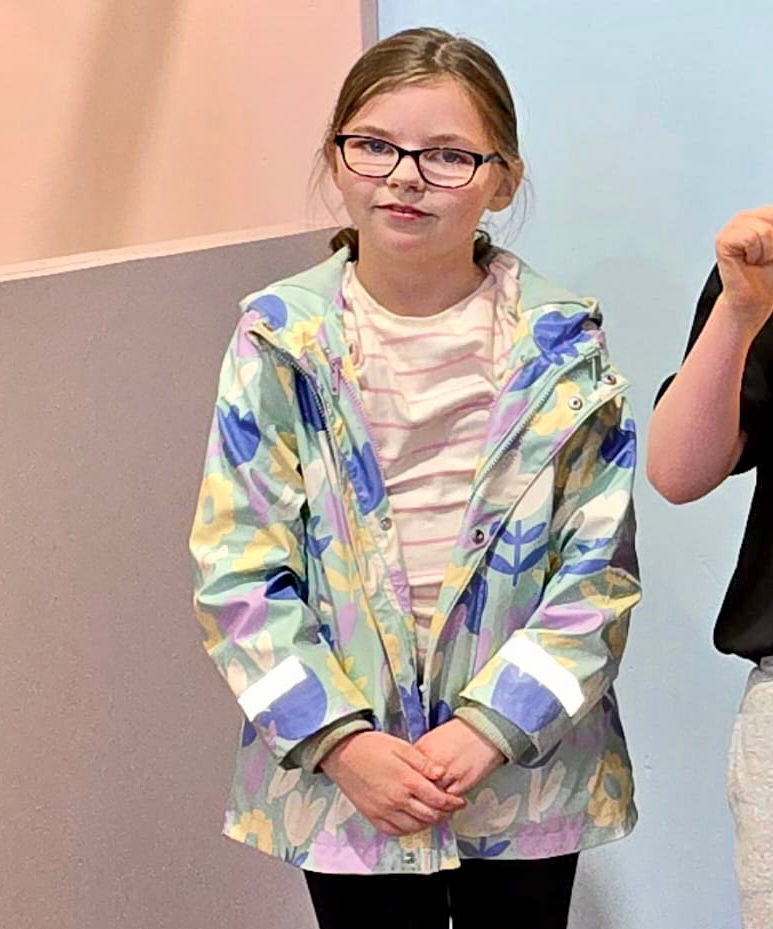
Before illness took over family life, Charleigh-Rose was a typical fun-loving little girl who loved crafts, being outdoors and spending time with her dog Piper.
Jenna described her daughter as “a beautiful, shy, kind little girl” with a caring nature and a quiet sense of humour.
“She’s such a funny, shy wee thing,” Jenna said.
“She loves anything outdoors and she’s always thinking about other people.”
Charleigh-Rose lives with her parents, Jenna and Mark, who have been together for 20 years, and her two older brothers aged 17 and 11.
The family say life before the diagnosis was busy but ordinary — school runs, family time and everyday routines.
Only months later, much of that childhood now revolves around hospital appointments, recovery periods and preparing for the next stage of treatment.
The symptoms that wouldn’t go away
Jenna said Charleigh-Rose’s symptoms began around November 2025 with what appeared to be recurring tummy bugs before persistent headaches and sickness started becoming impossible to ignore.
Over a six-week period, the family attended Antrim Area Hospital three times while also repeatedly contacting out-of-hours medical services as Charleigh-Rose’s condition deteriorated.
“At first we thought it was tummy bugs,” Jenna explained.
“But the third one never left her. She was constantly being sick.”
Some days, the nine-year-old was vomiting several times a day while continuing to complain of severe headaches.
Despite the repeated hospital visits, Jenna said she increasingly feared something more serious was being missed.
“Up to this point no tests were done and I felt like we were just being fobbed off,” she said.
“Even when Charleigh-Rose was showing what I now know were classic symptoms of a brain tumour.”
Eventually, the family were referred to the Acorn Centre at Antrim Area Hospital, a specialist children’s ambulatory care unit.
There, blood tests were carried out for the first time before the family were initially told everything appeared normal.
Later that evening, however, Jenna received a call informing her that doctors wanted to arrange an MRI scan “just to be safe”.
Only days later, Charleigh-Rose suffered a seizure.
The moment everything changed

On January 12 this year, the family’s fears escalated into panic.
“She had been sick from the end of November and was still constantly throwing up and complaining of sore heads,” Jenna said.
“We had gone to hospital multiple times and kept being told everything was fine.”
That seizure would become the first of many.
Her father Mark rushed her to Antrim Area Hospital where staff finally carried out an emergency MRI scan as Charleigh-Rose continued seizing.
The scan revealed a brain tumour.
Jenna said the family were taken into a side room where they received the devastating diagnosis.
“We were told she had a brain tumour,” she recalled.
“The staff member told us another child had recently gone through something similar and was now doing well, and that gave me hope.
“But I also kept thinking — if there had been another child with similar symptoms only weeks earlier, why had Charleigh’s symptoms been dismissed for so long?”
Jenna now believes greater awareness of childhood brain tumour symptoms is desperately needed, particularly when children experience prolonged headaches and persistent vomiting.
Although still considered rare, headaches and sickness are recognised warning signs of increased pressure on the brain caused by tumours.
Blue lights to Belfast and emergency surgery
From Antrim, Charleigh-Rose was transferred under blue lights by emergency ambulance to the Royal Belfast Hospital for Sick Children while continuing to experience seizures during the journey.
A doctor travelled alongside her with emergency medication ready if needed.
“She was seizing that much,” Jenna said.
When Charleigh-Rose arrived at the Royal, she was taken directly to Paul Ward before undergoing emergency procedures to stabilise her condition.
Doctors inserted an external shunt to relieve pressure on her brain and stop the seizures before further MRI scans were carried out ahead of major surgery.
The operation to remove the tumour lasted eight hours.
Jenna said the family’s life quickly became consumed by scans, emergency decisions, hospital wards and the constant uncertainty of waiting for results.
“The past few months have been a living nightmare — one I wouldn’t wish on any parent,” she said.
“The ups and downs from test results, surgeries and recovery is like a roller coaster.”
She praised staff at the Royal Belfast Hospital for Sick Children, particularly on Paul Ward and the Paediatric Intensive Care Unit (PICU), for the care they provided throughout Charleigh-Rose’s treatment.
“The Royal Hospital has been fantastic. I honestly can’t fault them,” Jenna said.
“Since Charleigh arrived there, they have done everything they possibly could for her.
“If it wasn’t for the teams in the Royal, Charleigh would not be here now.”
Paul Ward is a specialist neurological and burns unit within the Royal Belfast Hospital for Sick Children and has previously been recognised nationally for its care standards.
“She made it through the surgeries,” Jenna said.
30 rounds of radiotherapy completed

Since the diagnosis earlier this year, Charleigh-Rose has completed 30 rounds of radiotherapy.
Despite the intensity of the treatment, Jenna said her daughter faced it with remarkable bravery.
“She handled it so well,” she said.
“By the end of treatment she loved all the nurses helping her.”
After a six-week recovery break, chemotherapy is due to begin later this month.
The family expect to spend four or five days in hospital for each treatment cycle followed by around three weeks recovering at home.
Charleigh-Rose has six chemotherapy treatments ahead of her.
For now, Jenna says they are trying to bring small moments of joy back into their daughter’s life after months dominated by hospitals and treatment schedules.
Community support lifts the family
Jenna said support from the Ballymena community has helped the family through some of their darkest days.
Returning home recently, Charleigh-Rose found gifts and surprises waiting for her from local supporters and strangers touched by her story.
“When we got home from hospital she had loads of wee surprises to open,” Jenna said.
“That was really lovely.”

Her school, Kirkinriola Primary School, prepared a hamper for her, while a local mother whose own child had undergone cancer treatment created a wishlist so people could send gifts directly to Charleigh-Rose.
The family have also received support from Powered by Poppy and the Mark Lynn CHD Foundation, which sent gifts to help brighten Charleigh-Rose’s days during treatment.
Jenna said spending time on children’s wards opened the family’s eyes to just how many young families are affected by brain tumours and childhood cancer.
“After spending time on Paul Ward, we realised just how common brain tumours actually are in children,” she said.
According to Cancer Research UK, medulloblastoma is the most common malignant brain tumour in children, with around 50 to 70 children diagnosed each year across the UK.
The disease accounts for approximately 15 to 20 per cent of all childhood brain tumours and most commonly affects children aged between three and nine years old.
Symptoms parents should not ignore
Symptoms of medulloblastoma can often resemble common childhood illnesses, which can make diagnosis difficult during the early stages.
Possible warning signs include:
• persistent headaches
• ongoing vomiting or nausea
• balance problems or falls
• double vision or eyesight changes
• behaviour changes or unusual tiredness
Cancer charities advise parents to seek medical advice if symptoms persist or worsen over time.
As Charleigh-Rose prepares for the next stage of chemotherapy, Jenna says sharing her daughter’s story is about more than documenting one family’s ordeal.
She hopes greater awareness of the warning signs could help another child receive answers sooner — before another family reaches the same terrifying crisis point.
Visit Charleigh’s Facebook page My Little Warrior Charleigh-Rose by tapping the button below.


