


Visible police presence planned for Belfast student areas as safety campaign launches

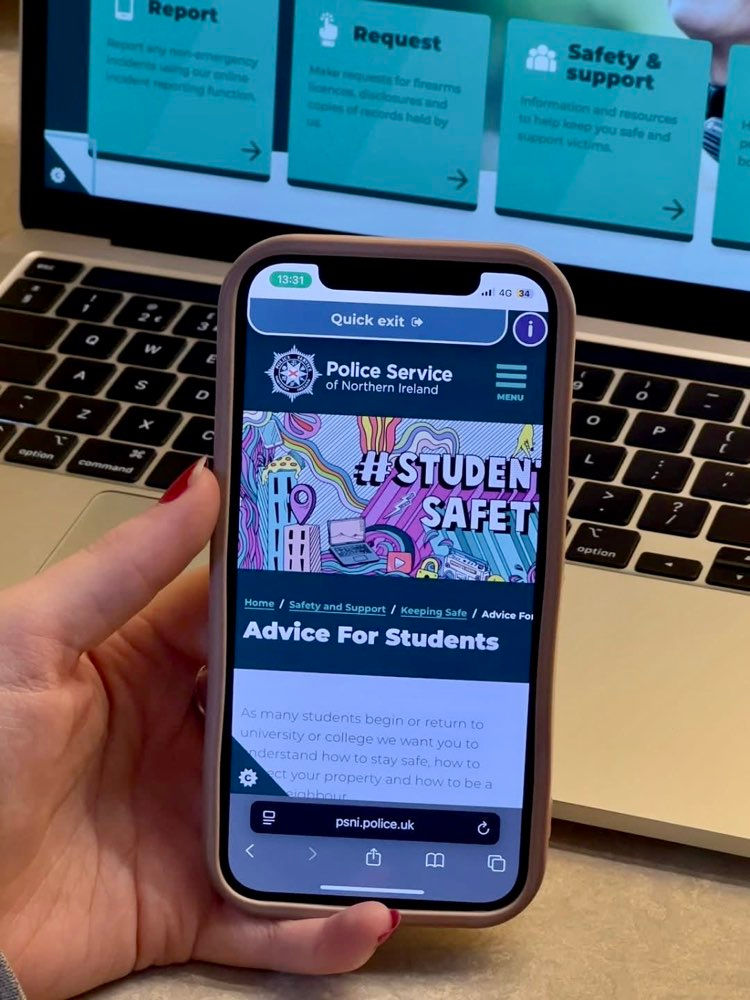
Students arriving in Belfast for the new academic year will see a visible police presence around accommodation areas as a safety campaign gets under way, with advice on accessing help during nights out and protecting themselves and their belongings.
The PSNI is also highlighting the Ask for Angela initiative, which offers a discreet way to seek help at more than 400 participating bars and clubs across Northern Ireland if someone feels vulnerable.
Launched today, Wednesday 9 September, the campaign brings together police, Queen’s University Belfast, Ulster University, Belfast Metropolitan College, Belfast City Council and SOS Bus NI.
For students from Ballymena and the wider area heading to Belfast, it sets out both the support available as they settle in and the importance of respecting the communities they are joining.
Officers to be visible and accessible
Chief Inspector Loreen Glenn said the safety of students and the wellbeing of the wider community were priorities, with local police working closely with education partners and Belfast City Council over the coming month.
“Our student safety campaign will provide crime prevention advice directly to students and across our social media channels. Officers will also be visible and accessible in the local community, reinforcing these messages and ensuring that we are there when needed. We will be working with partners on the ground to prevent harm and address any issues in the local area.”
She said the work also formed part of the PSNI’s commitment to creating safer spaces through its Tackling Violence against Women and Girls Action Plan.
“We know that it is an incredibly exciting time for our young people finding their own independence, many for the first time, but it can also be daunting.”
Ask for Angela offers discreet help

Kelly McPolin Belfast Met Pastoral Care Manager, Micky Murray, CEO of SOS Bus NI, Belfast Lord Mayor, Councillor Róis-Máire Donnelly, Chief Inspector Loreen Glenn, Ryan Rankin, Local Engagement Manager at Queen’s University Belfast and Gabrielle Smyth, Interim Residential Life Manager from Ulster University at the launch of the Student Safety campaign to encourage safe and respectful behaviour and provide an opportunity for students to learn more about their local police.
Police are encouraging students to familiarise themselves with Ask for Angela before heading out to enjoy Belfast’s nightlife.
Chief Inspector Glenn said more than 400 bars and clubs across Northern Ireland had signed up to the initiative.
“It is a simple, yet effective, initiative that allows those who may find themselves in a vulnerable situation with a quick and discreet way to access the help they need. Should any issues arise ‘Ask for Angela’ at participating venues.”
She said police would also work with university and college partners to help new students, including those arriving from overseas, adjust to living in Belfast and understand the support available.
Support when someone becomes vulnerable
Micky Murray, CEO of SOS Bus NI, said starting university or college could mean navigating both independent living and an unfamiliar city for the first time.
“Through our work on the streets of Belfast, we see first-hand the difference that early intervention, practical support and a friendly face can make when someone finds themselves vulnerable or in need of help.”
He added:
“Every student should be able to enjoy Belfast’s nightlife and communities in a safe, respectful and welcoming environment. We’re proud to play our part in making that happen and ensuring students know that, if they do need support, there are people and services available to help them.”
Respect for neighbours
The campaign also asks students to consider the people living alongside them, with police and partners working with local communities to address concerns.
Belfast Lord Mayor Councillor Róis-Máire Donnelly said:
“Students are a hugely important part of Belfast’s community, and we want everyone coming to the city to feel safe, welcome and supported.
“Everyone has a role to play in keeping our neighbourhoods safe. I would encourage students to look out for one another, be considerate of their neighbours and know where to go for help or support if they need it.”
Adjusting to life away from home
Ryan Rankin, Local Engagement Manager at Queen’s University Belfast, said the university recognised that student life could involve “navigating huge change, especially for those living away from home for the first time”.
He said Queen’s student volunteering schemes and wider community work encouraged students to look after themselves and one another, while the campaign helped connect them with support.
Gabrielle Smyth, Interim Residential Life Manager at Ulster University, said feeling safe and comfortable around campuses was an important part of a positive university experience.
Kelly McPolin, Belfast Met Pastoral Care Manager, said:
“It is important that students know where to access support, understand how to stay safe, and feel confident seeking help whenever they need it.”
Check accommodation and protect belongings

Alongside the campaign, the PSNI’s practical guidance encourages students to get to know their new area, exchange numbers with flatmates and save contact details for reputable taxi firms. Students should also locate their nearest hospital and police station and save the non-emergency number 101.
Before committing to accommodation, police advise checking door and window security, whether there is an alarm and how many people have keys. Students should find out whether the property belongs to an approved scheme or code of practice covering fire precautions, gas appliance safety and appropriate locks.
“When living with a group of friends there will always have to be compromises; just make sure it’s not on the security of the property.”
Once moved in, students should lock doors and windows when out, keep valuables out of sight and watch for people following residents into accommodation buildings.
Police recommend marking belongings with a Secured by Design-approved solution, displaying window stickers and registering property free on Immobilise, a national, police-approved database.
Secure bicycles and plan journeys home
Cyclists are advised to use two locks, secure the frame and both wheels to a cycle stand, and leave as little space as possible between the bike and stand. Locks should be kept off the ground, with security accreditation considered when choosing them.
Before a night out, students should plan their return journey, travel with people they know where possible and keep extra money available in case they become stranded or miss the last bus or train.
Police advise staying with friends, looking out for one another, avoiding isolated areas and shortcuts, and staying away from confrontational situations.
The guidance also says not to accept drinks from strangers or leave drinks unattended. Those drinking alcohol are encouraged to know their limits and alternate alcoholic drinks with water or soft drinks.
Stay alert online
Anyone meeting an online contact in person should choose a populated public place, decline lifts from that person and tell a friend or relative where they are going and when they expect to return.
Police warn against sending compromising or explicit images or videos, regardless of what someone else sends, because the exchange could be part of a sexual exploitation scam.
Students are also advised to avoid sharing private information online, review social media privacy settings and consider whether posts reveal details that could be used for identity theft.
For phones, the guidance recommends a secure screen lock, automatic locking after 30 seconds to one minute, strong and different passwords for apps, current software and tools that can locate a missing device.
Further advice and resources
Other phone-security advice includes using secure Wi-Fi and a VPN, downloading apps from verified stores, checking reviews and updates, encrypting data and avoiding modifications that remove built-in security restrictions. The PSNI also recommends antivirus protection.
Students can find practical guidance and videos through the following resources:
How to report an incident
Non-emergency incidents can be reported by calling 101 or using the PSNI online reporting service.
Online reporting is available 24 hours a day for matters including anti-social behaviour, vehicle damage and crimes that have already happened. Reports are handled by the same team that answers 101 calls.
Students who feel vulnerable in a participating venue can Ask for Angela to seek discreet help. In an emergency, always call 999.


