


Shutters down, costs rising: MEA business leaders warn town centres are reaching breaking point


Shutters down: The changing face of Ballymena town centre. Church Street, Ballymena.
Business leaders across Mid and East Antrim have issued a stark warning to councillors: town centres are entering a period of accelerating decline — and without urgent intervention the damage could become irreversible.
In coordinated correspondence sent directly by email to Mid and East Antrim Borough Council’s elected representatives, the chairs of Larne Business Forum and Ballymena Business Improvement District (BID) say rising costs, falling footfall, business closures and increasing vacancy are pushing high streets across Ballymena, Larne and Carrickfergus towards a critical point, and urges councillors to treat the deterioration of town centres as an urgent economic priority rather than a longer-term policy issue.
The letter from Larne Business Forum was circulated to elected representatives ahead of the council’s upcoming policy discussions.
Their message is blunt. Without decisive action from both the council and Stormont, traders warn that further closures and job losses are likely.
The intervention follows a series of setbacks for town centres, including the recent decision by long-established retailer McKillens to close its Church Street, Ballymena premises after more than 100 years of trading.

McGroggan’s on William Street, Ballymena - a business that has served generations of families with it’s iconic homemade ice cream - now up for sale.
Brian McRandal, Chair of Larne Business Forum, expressed support for the business and its staff following the announcement.
“I offer my personal support, and that of the Larne Business Forum, to the management and staff at McKillens following their heartbreaking decision to close their Church Street premises after more than 100 years of service.”
However, he stressed the closure should be seen as part of a much wider pattern affecting town centres across the borough.
“As Chair of the Larne Business Forum, I issue a call for coordinated action in response to the accelerating decline of town centres across [Mid and East Antrim].”
“While Ballymena has faced high-profile setbacks at the start of 2026, this is not a single-town issue. Across Mid and East Antrim, our town centres face the same pressures: rising costs, reduced footfall, increasing vacancy and a lack of sustained investment. The result is visible and worrying decline.

Bridge Street, Ballymena
The economic significance of those town centres remains substantial. Across Mid and East Antrim, approximately 8,300 people work in retail and wholesale sectors, with a further 3,500 employed in hospitality-related roles.
“These jobs are often the first step into employment for young or economically inactive people,” Mr McRandal wrote.
“Yet the commercial core of each town centre is now at a critical stage.”
He warned that the borough’s business rates base is shrinking in a damaging cycle where increasing costs and declining commercial viability feed into one another.
“For too many traders, the relationship feels one-way: rates are collected, but meaningful regeneration and practical support are not keeping pace with the challenges they face.”

Church Street, Ballymena
Behind the call for urgent intervention lies a deeper frustration among traders that years of engagement with policymakers have not yet delivered the scale of response required.
Mr McRandal wrote that despite sustained engagement between business organisations and public bodies, “policy responses have not matched the scale of the problem”.
For many traders, he suggested, the experience has been one of mounting pressure without the structural changes needed to stabilise town centres.
The letter argues that while smaller regeneration initiatives can be helpful, they do not address the deeper issues affecting the commercial viability of town centres.

Wellington Street, Ballymena
“Small-scale improvements have their place. Shopfront repainting and minor grants can help,” Mr McRandal wrote.
“But cosmetic change will not address the structural issues undermining our town centres.”
He also highlighted the role of property ownership in the condition of high streets and urged the council to prepare for stronger intervention where buildings are neglected.
“With new powers expected through the Dilapidation Bill, MEABC should prioritise building a dedicated team to require landlords to address dereliction and underinvestment at their own cost.”
Mr McRandal said meaningful regeneration must focus on reshaping town centres around how people now use them — creating places where people want to spend time rather than simply pass through.
“What is required now is a credible, deliverable plan that reshapes our commercial cores around what people actually want: vibrant streets, thriving independent businesses and real reasons to visit and spend time in our towns.”
“This may involve compacting the commercial core to sustain a stronger mix of retail, leisure, hospitality, arts and services.”
He emphasised that town centres remain central to both community life and the wider local economy.
“Town centres are not optional,” Mr McRandal wrote.
“They are the heart of our communities, the backbone of the local economy, a major source of employment and the shop window for investment and tourism.”
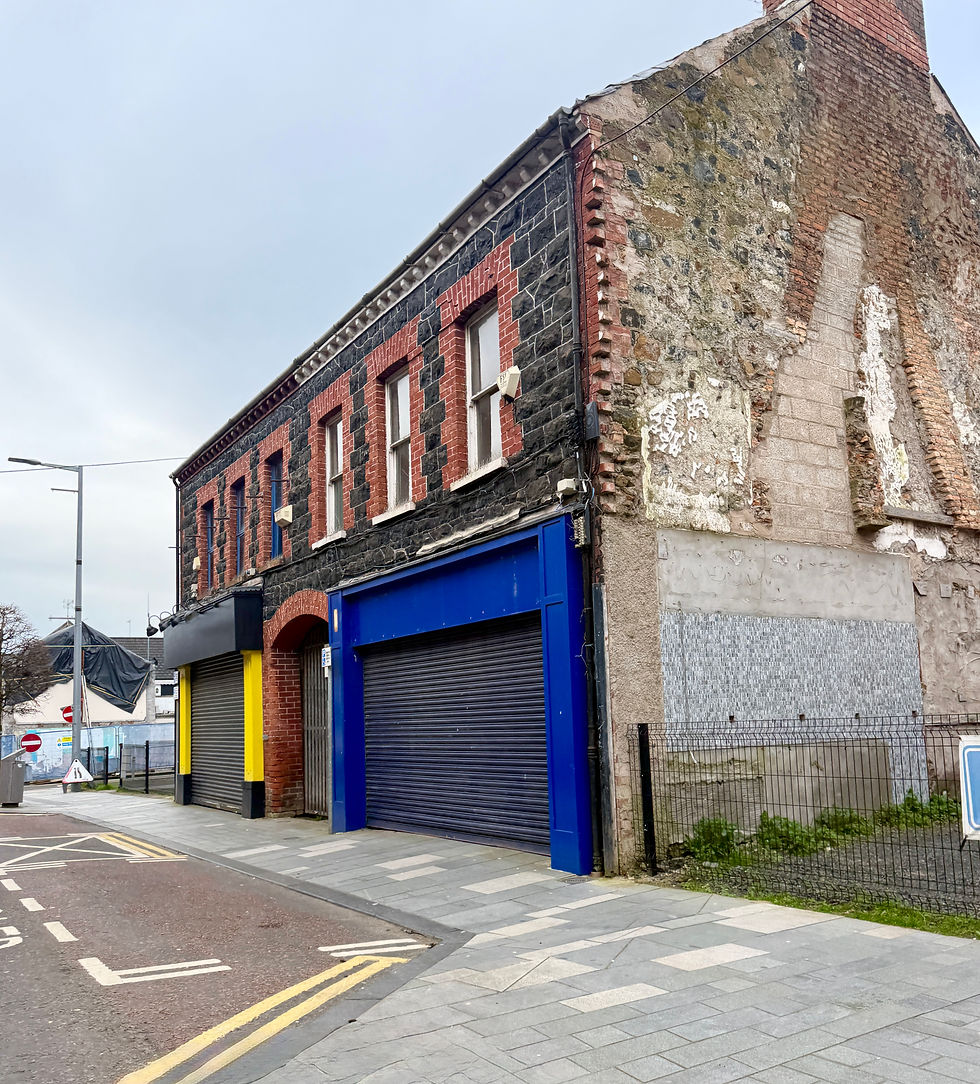
Ballymoney Street, Ballymena
Mr McRandal warned that wider economic development could be undermined if town centres appear visibly deteriorating to investors and visitors.
“There is little value in investing millions in wider economic development if, to investors and visitors alike, the town centre is visibly deteriorating. First impressions matter.”
Tourism ambitions could also be weakened if visitors encounter empty premises and limited retail or hospitality choice.
“From a hospitality perspective, we talk about growing tourism — but what do visitors see when shutters are down and shops are empty? How do we capture visitor spend if the retail and hospitality offer is too weak to benefit?”
Without decisive action, he warned, the consequences could be long-lasting.
“Without decisive action from both MEABC and Stormont, decline will continue and jobs will continue to be lost.”
“Multi-generational traders face unprecedented pressure, and many are at risk of permanent closure. We must act urgently before decline becomes irreversible.”
To address the issue, Mr McRandal proposed the creation of an MEABC Town Centre Task Force bringing together councillors, traders, landlords and regeneration partners, ideally led by the council’s Interim Chief Executive.
Mr McRandal noted that the council has previously demonstrated its ability to respond strategically to economic shocks through dedicated task forces, arguing that a similarly focused response is now required to address the challenges facing town centres.
“A similarly focused approach is now required for our town centres.”
Closures highlight pressure on high streets

Church Street, Ballymena
The proposal has also been formally supported by Ballymena Business Improvement District (BID).
In a separate letter to councillors, Roy Smyth, Chair of Ballymena BID, said the organisation “would strongly welcome the establishment of a Town Centre Task Force.”
Mr Smyth said a similar task force had previously been explored in the aftermath of the Covid period, but the initiative did not fully progress due to staffing changes within the council.
“A similar initiative was explored following the Covid period, however due to staffing changes within Council it did not fully progress. We believe the time is right to revisit this concept with renewed focus and shared commitment.”
Mr Smyth noted that town centre business organisations already collaborate through existing regeneration structures, including the Revitalisation Programme and the Local Economic Partnership, which deliver projects supported by the Department for Communities and the Department for the Economy.
While these partnerships remain valuable, he said a dedicated town-centre-focused task force working directly with the council would ensure sustained strategic attention on the commercial cores of Ballymena, Larne and Carrickfergus.
He said recent announcements involving long-standing businesses had reinforced concerns about the pressures facing high streets.
“Recent announcements involving long-standing businesses, including McKillens and Wyse Byse, highlight the changing and challenging environment facing high streets.”

The former Bank of Ireland, Broadway Avenue, Ballymena
“Each closure has its own circumstances, yet collectively they reflect the wider pressures affecting retail, hospitality and service businesses across all three towns. These challenges reinforce the need for coordinated intervention and meaningful support from both Council and Stormont.”
Both organisations argue that a dedicated Town Centre Fund should accompany the proposed task force, enabling practical support for businesses, encouraging start-ups and attracting investment back into town centres.
Mr Smyth said such an approach could help restore confidence and strengthen long-term economic resilience.
“Our town centres remain central to community life, local employment and economic confidence. Protecting and strengthening them requires partnership, clear leadership and a shared long-term vision.”
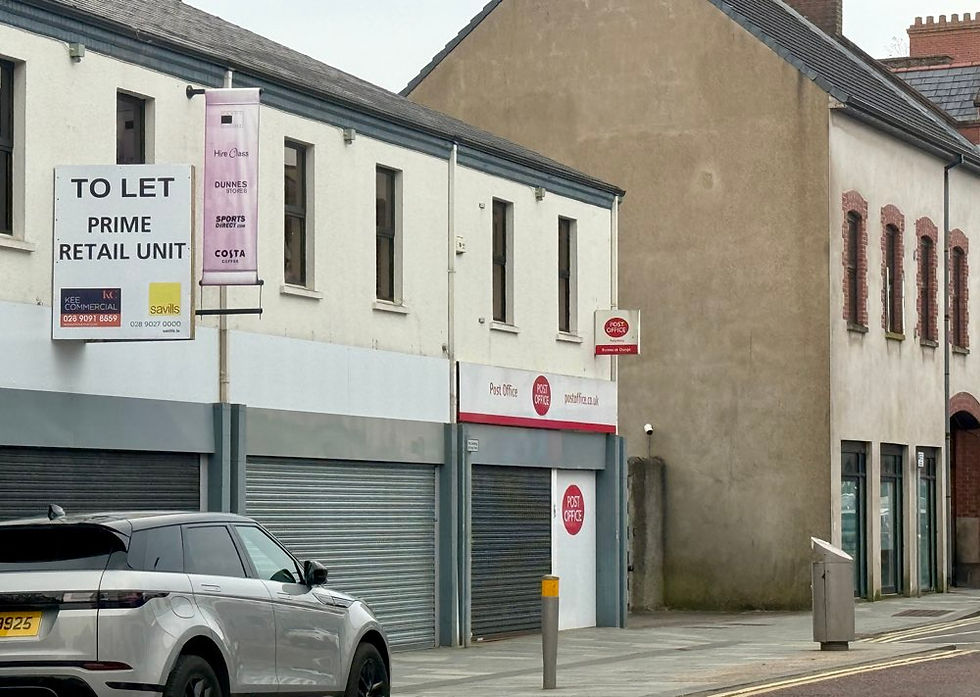
Wellington Street, Ballymena
Mr Smyth expressed Ballymena BID would welcome direct engagement with councillors on the proposal and encouraged elected representatives to share their views on how the borough’s town centres can be strengthened.
But the message to councillors was direct: delay is no longer an option.
“This is not an issue for the future or for consideration at a later stage. Action is required now.”
Ballymena BID said that by working together with “a united focus and voice”, businesses, council and government partners could deliver stronger outcomes for businesses, residents and visitors across Mid and East Antrim.
Both business organisations argue that without coordinated intervention, the economic and social role of town centres across Mid and East Antrim will continue to weaken.
At a glance
Business leaders across Mid and East Antrim have warned that town centres are facing accelerating decline.
Letters sent to councillors by Larne Business Forum and Ballymena BID call for urgent coordinated action.
Retail and wholesale sectors employ around 8,300 people locally, with a further 3,500 working in hospitality roles.
Closures involving long-standing businesses such as McKillens and Wyse Byse are cited as signs of wider pressure on high streets.
Business groups say rising costs, falling footfall and increasing vacancies are undermining town centre viability.
They are calling for a council-led Town Centre Task Force and a dedicated investment fund to support businesses and regeneration.
The letters warn that without decisive action from council and Stormont, further closures and job losses could follow.


