Pressure mounts on DAERA over controversial Fivemiletown operation that saw dozens of cattle shot


The scene of destruction at a farm in Fivemiletown, County Fermanagh
Political pressure is mounting on the Department of Agriculture, Environment and Rural Affairs (DAERA) over a controversial cattle destruction operation in County Tyrone, with politicians from across the political spectrum and Northern Ireland’s largest farming organisation demanding greater transparency over how the operation was planned and carried out.
The controversy does not centre on the court order that resulted in the farmer being banned for life from keeping animals following animal welfare convictions.
Instead, it focuses on whether the subsequent destruction of cattle at a farm on Shantonagh Road, Fivemiletown, was conducted in a way that was lawful, proportionate, humane and appropriate, after graphic images and eyewitness accounts sparked widespread concern across farming communities and beyond.
As calls for answers continue to grow, attention is increasingly turning to DAERA’s decision-making, operational planning and the review now under way.
Questions over how the operation unfolded
The latest political intervention comes from TUV North Antrim MLA Timothy Gaston, who has written to Agriculture Minister Andrew Muir seeking detailed answers about the operation.
In a letter dated 31 July, Mr Gaston makes clear at the outset that he is “not disputing the court findings” which resulted in the farmer being disqualified from keeping animals.
Instead, he says he is deeply concerned by first-hand accounts he has received from members of the public who witnessed what he describes as the Department’s “botched operation”.
According to the letter, Mr Gaston says he has been informed that 48 cattle were shot by Department officials, with 45 ultimately killed, while 14 of 15 cattle that had reportedly already been sold to another farmer were spared.
The letter also states that three calves escaped during the operation and alleges that one later required veterinary treatment after sustaining a reported gunshot wound.
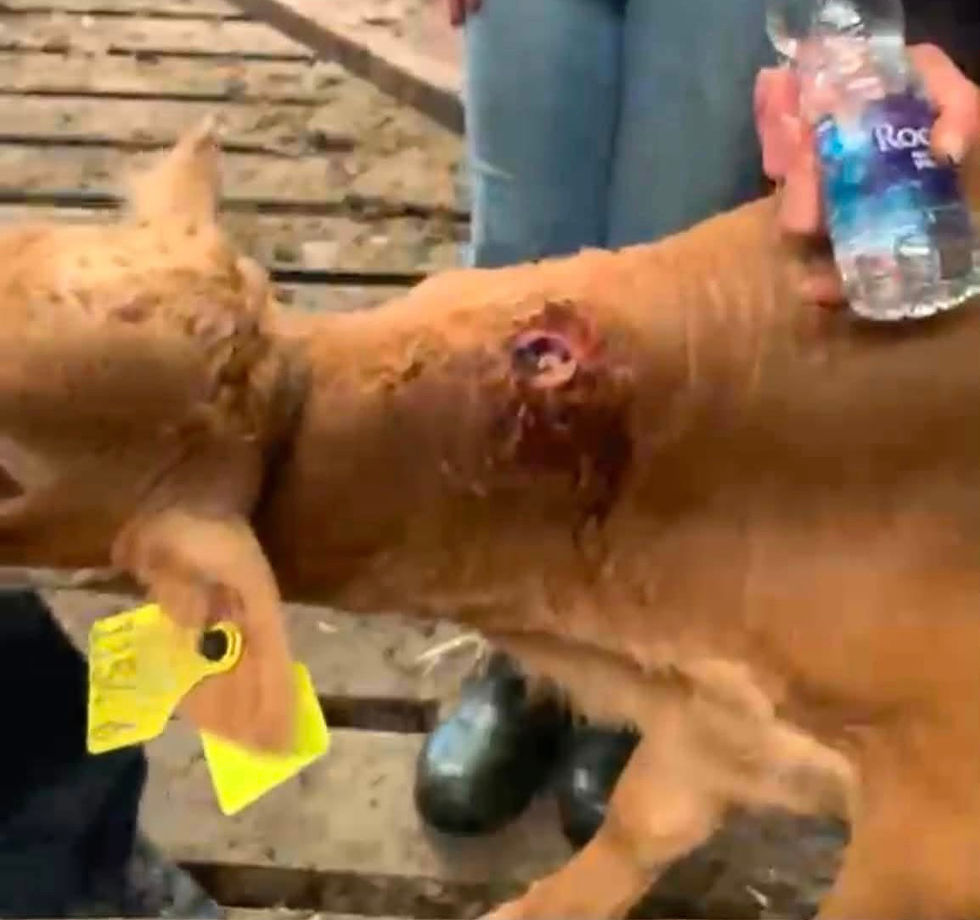
Mr Gaston further says he has been told that parts of the shooting were visible from nearby public roads, exposing members of the public to distressing scenes.
Thirteen questions put to the Minister
Mr Gaston’s letter asks the Minister to answer 13 detailed questions that go beyond the destruction of individual animals and instead examine the planning and execution of the operation itself.
Among the issues raised are:
the statutory or legal authority under which the cattle were destroyed;
how many animals were actually assessed as suffering welfare issues;
whether any cattle that had already been sold were destroyed and, if so, under what authority;
why apparently healthy cattle were not removed from the holding by alternative means;
why three calves which escaped were later licensed to move to another herd if all animals required destruction;
why cattle reportedly suitable for the food chain were not permitted to enter it;
whether DAERA will publish its operational plan covering the humane destruction of the cattle, including welfare, safety and contingency arrangements;
why PSNI assistance was initially requested; and
what conclusions have emerged from the Department’s review of the operation.
The letter also questions reports that carcasses were removed by DAERA the following day despite claims that earlier arrangements had placed responsibility for their disposal elsewhere.
Mr Gaston asks the Minister to clarify whether the reports he has received accurately reflect what occurred and, if they do, explain how those circumstances arose.
Concern spreads beyond Stormont
What began as an enforcement operation at a single farm has rapidly developed into a wider debate about how large-scale livestock destruction should be carried out in Northern Ireland.
While there is broad acceptance among those now speaking publicly that DAERA was acting following a court order, many argue that legitimate questions remain about how the operation was conducted.
Graphic images shared online in recent days, together with accounts from people who say they witnessed the operation, have fuelled widespread discussion within farming communities and prompted calls for greater accountability.
For many, the central issue is no longer whether the Department had legal authority to intervene, but whether the operation itself could have been planned and executed in a manner that reduced distress to both the animals and members of the public.
That distinction has become the focus of the growing controversy.
Ulster Farmers’ Union seeks urgent meeting

The aftermath of the DAERA operation
The issue has prompted intervention from the Ulster Farmers’ Union (UFU), which has requested an urgent meeting with Agriculture Minister Andrew Muir.
The Union said it has also sought further information from DAERA regarding both the planning and execution of the enforcement operation and the decision-making process behind it.
UFU President John McLenaghan said the level of concern among members “cannot be ignored”.
While recognising the operation was carried out under a Court Deprivation Order, he said serious questions had been raised about how it had been conducted.
“Regardless of the circumstances surrounding the enforcement action, the destruction of livestock must be carried out in a manner that is humane, proportionate and maintains confidence among farmers and the wider public.
“We have requested an immediate meeting with Minister Muir to discuss our concerns directly. We also note DAERA’s commitment to undertake a lessons learned review, and we expect that process to provide clear answers and full transparency.”
The intervention by Northern Ireland’s largest farming organisation significantly increases pressure on the Department, demonstrating that concerns extend beyond political parties and into the agricultural sector itself.
Well-known farmer, David Irwin (Redhouse Holsteins) is calling for all ties and correspondence to be cut with DAERA until a full independent investigation is established into the Fivemiletown operation
Calls for accountability across party lines
Political concern has continued to grow across Stormont.
DUP Upper Bann MP Carla Lockhart said people repeatedly described themselves as “furious”, “sickened”, “appalled” and “horrified” when speaking to her about the incident.
She said many viewed the operation as one of the biggest controversies ever faced by DAERA and called for a full independent public inquiry into what happened, who authorised the operation and whether anyone should ultimately be held accountable.
Ulster Unionist MLA Robbie Butler has requested an extraordinary meeting of Stormont’s Agriculture, Environment and Rural Affairs Committee, describing the silence from both the Minister and DAERA officials as “startling and disappointing”.
He said he would be seeking transparency, truth, accountability and change, adding that farmers deserved confidence in the systems designed to protect animal health and that an independent inquiry may ultimately be required if confidence cannot be restored.
Meanwhile, a local Sinn Féin councillor Eugene McConnell, who attended the scene during the operation, acknowledged that DAERA was acting under a court order and accepted there may have been valid legal and animal welfare reasons requiring the cattle to be destroyed.
However, he questioned whether an operation involving the destruction of so many animals should have taken place in circumstances where members of the public could witness what he described as deeply distressing scenes.
Councillor McConnell said the operation resembled the “Wild West”, raising concerns about planning, public safety, animal welfare and whether alternative arrangements could have been made to minimise distress.
Although politicians have expressed differing views on the wider issues surrounding the case, representatives from unionist and nationalist parties have converged on one central point: that the public deserves a fuller explanation of how the operation was planned, authorised and carried out.
Review now under increasing scrutiny
DAERA has confirmed that it is conducting a review into the circumstances surrounding the operation.
As pressure grows from political representatives across the Assembly, the Ulster Farmers’ Union and members of the farming community, that review is likely to come under increasing scrutiny.
Its findings may determine whether confidence can be restored or whether demands for a wider independent investigation continue to gather momentum.
Love Ballymena has approached DAERA for comment on the issues raised in this article. Any response received will be reflected fairly and added to this report.