


Northern Ireland alcohol deaths remain stubbornly high as campaign urges people to rethink drinking habits


Alcohol-related deaths in Northern Ireland remain at concerning levels, with health officials and addiction specialists warning that many people may be drinking more than they realise — particularly at home.
As Northern Ireland Alcohol Awareness Week gets underway on Monday, 15 June, the Public Health Agency (PHA), community pharmacy teams and alcohol support organisations are urging people to take a closer look at their drinking habits and consider making small changes that could have a significant impact on their health.
The call comes as recent figures reveal hundreds of alcohol-specific deaths continue to be recorded annually across Northern Ireland, while survey data shows almost half of drinkers consume most of their alcohol at home.
A hidden health risk in many homes
This year’s Northern Ireland Alcohol Awareness Week, running from 15–21 June, is being delivered through a partnership between the PHA and Northern Ireland’s five Drug and Alcohol Connections Services under the theme of “better choices”.
The campaign aims to increase understanding of alcohol-related harm, encourage people to become more aware of alcohol units, and support healthier decisions around drinking.
According to the Northern Ireland Health Survey 2024/25, around 76% of adults aged 18 and over reported drinking alcohol. The survey found that 79% of men and 73% of women were drinkers, while male drinkers were twice as likely as female drinkers to report drinking on three or more days each week.
Perhaps most significantly, the survey found that 46% of drinkers consume most of their alcohol at home, raising concerns that people may be underestimating how much they are drinking through larger self-poured measures and additional drinks that are not carefully monitored.
Deaths continue to affect families and communities
The most recent statistics cited by the PHA show that 397 alcohol-specific deaths were registered in Northern Ireland during 2024.
Almost 65% of those deaths were male, highlighting the disproportionate impact alcohol continues to have on men across Northern Ireland.
Meanwhile, Northern Ireland charity ASCERT says wider long-term trends remain deeply troubling.
Drawing on the latest available data from the Northern Ireland Statistics and Research Agency (NISRA), ASCERT highlighted that alcohol-specific deaths have increased by 65.5% over the past decade.
The organisation said the highest rates of alcohol-specific deaths are among people aged 45–64, accounting for almost 64% of all deaths.
Alcoholic liver disease remains the leading cause, responsible for nearly three-quarters of alcohol-specific deaths.
The figures also reveal a stark inequality, with people living in the most deprived communities experiencing almost four times as many alcohol-specific deaths as those living in the least deprived areas.
Health experts warn of serious long-term consequences
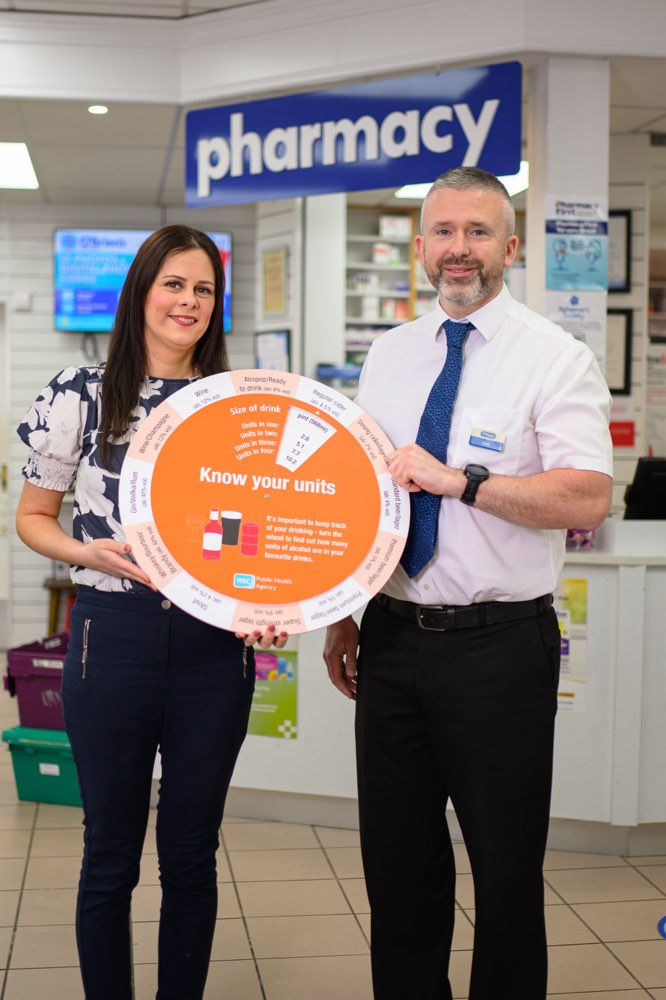
Stephanie Hanlon, Regional Lead for Drugs and Alcohol at the Public Health Agency, and community pharmacist Niall O’Brien
Stephanie Hanlon, Regional Lead for Drugs and Alcohol at the Public Health Agency, said many people remain unaware of the health risks associated with regularly exceeding recommended drinking limits.
She said:
“The risk of developing serious illnesses such as heart attack, stroke and certain cancers increases with the more alcohol we drink on a regular basis. Many people may not realise they could be drinking more than the safer limits set out by the Chief Medical Officers, which could be affecting both their physical and mental health.”
Ms Hanlon said alcohol remains a powerful drug that can significantly affect individuals, families and wider communities.
She encouraged people to monitor what they drink at home, where larger self-poured measures can quickly increase alcohol consumption without people fully realising it.
Simple changes such as tracking drinks, introducing alcohol-free days and replacing some alcoholic drinks with soft drinks or alcohol-free alternatives can help reduce overall intake, she said.
Understanding the 14-unit guideline
Health officials continue to advise that, to keep alcohol-related health risks at a lower level, adults should not regularly drink more than 14 units of alcohol per week.
That can equate to as little as:
• Four to six pints of beer, depending on strength
• Six 175ml glasses of wine
The guidance recommends spreading alcohol consumption over at least three days and including several alcohol-free days each week.
Throughout June and July, the PHA’s Living Well programme is running a “Know Your Units” campaign in partnership with community pharmacies across Northern Ireland.
Participating pharmacies are offering members of the public a free ‘Focus On Alcohol’ information leaflet and unit calculator wheel to help people better understand alcohol content and recommended limits.
The resource is available online at:
Pharmacies and support services available locally
Community pharmacist Niall O’Brien said pharmacies are well placed to help people better understand alcohol consumption and its impact on health.
He said:
“Understanding alcohol units is an important step in keeping track of how much you drink and making informed choices about your health. If you regularly drink up to 14 units a week, it is best to spread this over three or more days. If you want to cut down, try building in several drink-free days each week.”
He added that pharmacy teams can offer advice, raise awareness of alcohol-related risks and help direct people towards appropriate support services where needed.
ASCERT urges people to reflect on drinking habits
ASCERT Chief Executive Gary McMichael said Northern Ireland Alcohol Awareness Week provides an opportunity for people to honestly assess their relationship with alcohol.

ASCERT Chief Executive Gary McMichael
He said:
“These figures are a stark reminder that alcohol continues to cause significant and avoidable harm across Northern Ireland. Behind every statistic is a family and a community impacted by loss, illness and distress.”
He added that even small reductions in alcohol consumption can deliver meaningful improvements to both physical and mental health.
As part of the campaign, ASCERT is encouraging people to ask themselves several important questions:
• How many alcohol-free days do you have each week?
• Do you know how many units of alcohol you are consuming?
• Do you know the recommended drinking guidelines?
• Has a bottle of wine shared in the evening gradually become two?
• Has a friend or family member expressed concern about your drinking?
• Are you worried about someone else’s alcohol use?
Where to get help
Anyone concerned about their own drinking, or that of a family member or friend, is encouraged to speak to their pharmacist or GP.
Information on support services is available at:
To find activities taking place during Northern Ireland Alcohol Awareness Week in local areas, visit:
ASCERT provides free and confidential support services for young people, adults and families affected by alcohol, drugs, mental health and wellbeing issues.
Support includes:
• One-to-one support and counselling
• Family support services
• School-based prevention, education and counselling programmes
• Online resources and self-help information
• Workplace training
People seeking support can visit www.ascert.biz or call 0800 2545 123.
With alcohol-related harm continuing to claim lives across Northern Ireland and affecting families in every community, health organisations say Alcohol Awareness Week is not about demanding dramatic lifestyle changes, but helping people make informed decisions that could improve their health, wellbeing and future quality of life.


