


Homelessness crisis deepens as Stormont committee warns vital services could collapse within months

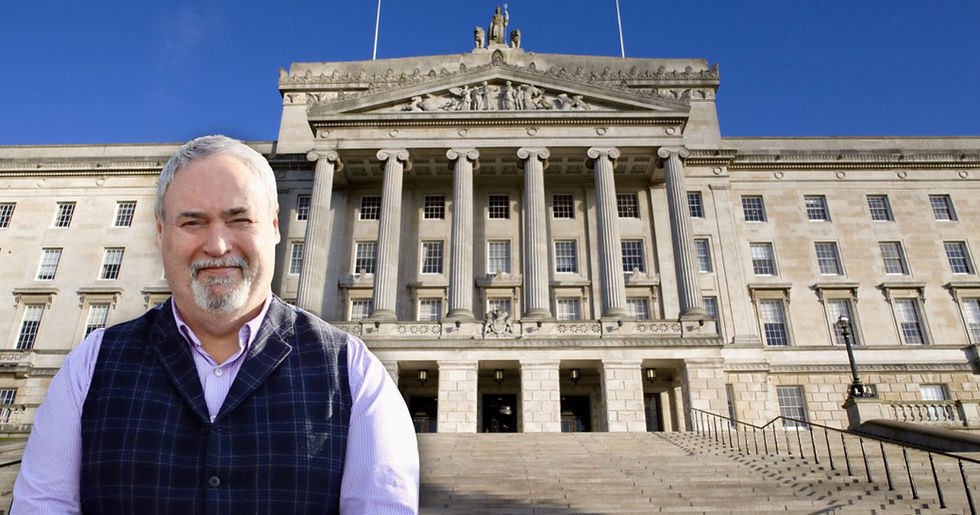
Committee for Communities Chair, Colm Gildernew MLA
Homelessness services across Northern Ireland are under escalating strain, with frontline providers warning that some essential support programmes could become unviable within the current financial year without urgent government intervention.
A stark new report from the Committee for Communities, reinforced by detailed findings from an Assembly committee inquiry into homelessness and the Supporting People Programme, lays bare the scale of a system under mounting pressure—driven by rising demand, increasingly complex need, and a funding model no longer sustainable in real terms.
The findings, drawn from evidence gathered during Homelessness Awareness Week 2025 alongside written submissions and testimony from frontline organisations at a Committee session on 4 December 2025, paint a picture of a system increasingly locked into crisis response rather than prevention.
Rising homelessness and hidden demand beyond official figures
The report highlights the scale of housing need across Northern Ireland, with analysis of NISRA figures by the Simon Community showing that as of September 2025, 62,314 people were recorded as homeless.
At the same time, more than 90,000 people remain on the social housing waiting list, while the number of children living in temporary accommodation continues to rise.
However, Assembly scrutiny found that these figures likely understate the true extent of the crisis, with “hidden homelessness” — including people in insecure, overcrowded or informal arrangements — not fully captured in official data.
Evidence also pointed to rising Full Duty Applicant numbers, widely regarded as a more meaningful measure of acute need, signalling sustained and growing pressure on the system.
‘Perfect storm’ facing frontline services
Committee Chair Colm Gildernew MLA described the situation as deeply concerning, warning that homelessness services are now facing a convergence of pressures that is pushing them towards breaking point.
“The evidence presented to the Committee was clear and deeply concerning,” he said.
“Homelessness services in Northern Ireland are facing a perfect storm of rising demand, increasingly complex need and a funding model that is no longer sustainable in real terms.”
The report emphasises that cases are becoming more complex, often involving trauma, mental health challenges and wider health inequalities, increasing the intensity and cost of support required.
System failing to prevent homelessness
A central conclusion of the Assembly inquiry is that prevention is not being prioritised, with services increasingly forced into reactive crisis management.
Mr Gildernew warned that this approach is both ineffective and financially unsustainable.
“The Committee is particularly concerned that the system is becoming more reliant on costly crisis interventions rather than early, preventative support,” he said.
“This approach is neither effective nor value for money.”
Evidence shows that failure to intervene early is driving higher long-term costs across housing, health and social care systems.
Heavy reliance on temporary accommodation driving costs and instability
The report identifies a growing dependence on temporary accommodation, including hotels and bed-and-breakfast placements, as a major structural issue.
These arrangements are significantly more expensive than long-term housing solutions and can be destabilising for individuals and families, particularly children.
The Committee concluded that reducing reliance on temporary accommodation is essential to both improving outcomes and controlling costs.
Social housing supply falling far short of need
Assembly scrutiny also found that social housing delivery is not keeping pace with demand, with waiting lists continuing to grow and allocations representing only a fraction of those in need.
Without a significant increase in housing supply, the report warns that homelessness levels will continue to rise regardless of service interventions.
Supporting People Programme under severe financial strain
At the centre of the crisis is the Supporting People Programme, which provides housing-related support to around 20,000 people each year.
The Committee heard that the programme is under acute financial pressure, with providers warning that increases in the National Living Wage and Employer National Insurance Contributions will add an estimated £5.5 million in costs in 2025/26.
Critically, there has been no corresponding uplift in funding to absorb these increases.
“Without immediate financial stabilisation, we were told that some vital services – particularly those supporting young people and people with complex needs – may become unviable within this financial year,” Mr Gildernew said.
The warning raises the prospect of service reductions or closures at a time when demand is already at record levels.
Workforce crisis undermining service delivery
The report highlights significant recruitment and retention challenges, with frontline support staff paid as little as £12.66 per hour.
Low pay, combined with the complexity and intensity of the work, is contributing to staffing shortages that are limiting service capacity and continuity of care.
Fragmented system and lack of coordinated response
Assembly findings point to fragmented governance and oversight, with multiple departments and agencies involved but no single coordinated system driving delivery.
The report calls for a more integrated, cross-departmental approach, recognising homelessness as a health, trauma and social issue rather than solely a housing problem.
Economic pressures accelerating the crisis
Wider structural factors are also intensifying demand, including the cost-of-living crisis, rising rents, reduced affordability and landlords exiting the private rental sector.
These pressures are increasing reliance on public housing systems and pushing more households towards homelessness.
Cost of inaction shifting across public services
The Committee warns that failing to invest in prevention does not reduce costs but shifts them elsewhere, particularly onto health and social care services.
This creates a cycle where short-term savings result in higher long-term expenditure and poorer outcomes.
Five key recommendations for urgent action
In response to its findings, the Committee has set out five strategic recommendations aimed at stabilising services and shifting the system towards prevention:
• Immediate agreement of a multi-year Supporting People budget, with annual inflationary uplifts
• Completion of a comprehensive review of homelessness legislation, with a stronger focus on prevention
• Extension of the ‘threatened with homelessness’ period in line with best practice elsewhere
• Establishment of a cross-departmental task force to address homelessness as a health, trauma and social issue
• Improved use of data to capture both statutory and hidden homelessness
Call for immediate Executive action
Concluding the report, Mr Gildernew issued a direct appeal to the Department for Communities and the Northern Ireland Executive to act without delay.
“Failing to invest in prevention simply shifts costs onto other public services,” he said.
“This report sets out a compelling case for urgent, coordinated action. In the first instance, the Committee urges the Minister for Communities and the Executive to accept the report’s recommendations.”
The findings underscore the urgency of the situation, with the risk that without swift intervention, both the scale of homelessness and the stability of frontline services will continue to deteriorate.
At a glance
• 62,314 people recorded as homeless in Northern Ireland (September 2025)
• Over 90,000 people on the social housing waiting list
• Hidden homelessness means true figures are likely higher
• Supporting People Programme assists around 20,000 people annually
• £5.5 million cost increase expected in 2025/26 due to wage and NI changes
• Frontline staff paid from £12.66 per hour, impacting recruitment
• Increasing reliance on costly temporary accommodation
• Social housing supply not keeping pace with demand
• Committee warns some services could become unviable within this financial year
• Five recommendations issued, including multi-year funding and legislative reform


