


Health Minster welcomes £42m digital pharmacy overhaul as paper prescriptions to end


L-R Fionnuala Walsh, Head of Funding UK Portfolio, The National Lottery Community Fund, Jacinta Linden, Co-Director of Together for Families, Health Minister Mike Nesbitt, Paul Sweeney, Chair of the Northern Ireland Committee, The National Lottery Community Fund and Peter Toogood, Deputy Secretary, Social Care and Public Health Policy Group.
Paper prescriptions are set to become a thing of the past in Northern Ireland under a major £42 million digital transformation programme designed to overhaul how patients receive medicines and access care through community pharmacies.
The move forms part of more than £100 million in fresh transformation funding announced for the health service, alongside a separate £59.2 million initiative aimed at intervening earlier to support struggling children and families before problems reach crisis point.
The funding package signals one of the most significant pushes yet towards modernising frontline healthcare and family support services across Northern Ireland, with ministers arguing the changes could improve patient safety, reduce pressure on hospitals and GP surgeries, and bring more services directly into local communities.
Digital prescription system to replace paper process
At the centre of the investment is the new ePharmacy Primary Care Digital Reform Programme, which has secured £42 million through the Public Service Transformation Fund.
The programme will introduce an electronic prescription transfer system allowing prescriptions to move digitally from GPs and Out of Hours services directly to community pharmacies, removing the need for traditional paper prescriptions.
Health officials say the new system is intended to streamline the process for patients while reducing delays, improving accuracy and modernising the way prescriptions are handled across primary care.
Alongside the electronic transfer system, a new digital platform will also be developed to manage clinical services delivered through community pharmacies.
The Department says the wider reforms are expected to:
• improve patient safety
• expand access to treatment
• reduce administrative burdens
• bring more care closer to people’s homes
• support wider reform of primary and community care services
Health Minister Mike Nesbitt said the scale of prescribing activity across Northern Ireland highlighted why the shift to digital systems was necessary.
“With over 45 million items prescribed and dispensed annually across Primary Care in Northern Ireland, transitioning from paper prescriptions to a digital system will genuinely transform patient experience,” he said.
“This project and the new digital platform will help to make Health and Social Care as safe as possible, accelerate primary care reform and help support our move towards a Neighbourhood model of care for primary, community and social care.”
£59m initiative targets earlier support for families
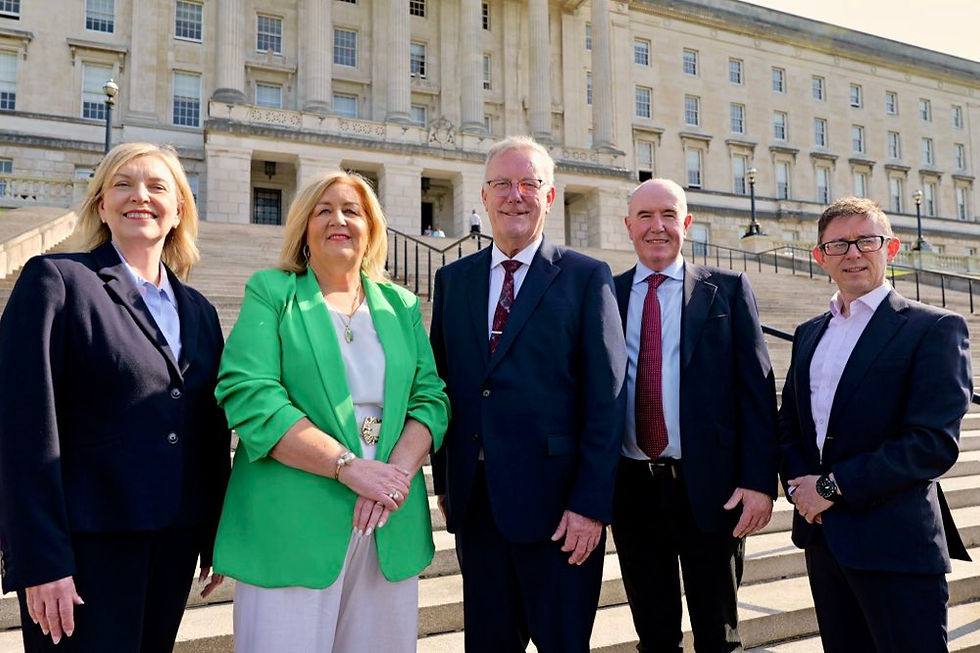
L-R Cathy Harrison, Chief Pharmaceutical Officer DoH, Jacinta Linden, Co-Director of Together for Families, Health Minister Mike Nesbitt, Paul Sweeney, Chair of the Northern Ireland Committee, The National Lottery Community Fund and Peter Toogood, Deputy Secretary, Social Care and Public Health Policy Group DoH.
A further £29.2 million in transformation funding has been allocated to a new “Together for Families” programme aimed at changing how vulnerable children and families receive support.
The initiative has also secured an additional £30 million commitment from The National Lottery Community Fund — described as the organisation’s first strategic investment of its kind in Northern Ireland.
The programme is designed to shift services towards earlier intervention and stronger family support, with a focus on helping families before problems escalate into crisis situations.
Officials say the model has been developed jointly between statutory agencies, voluntary organisations and community groups in an attempt to create more joined-up support systems.
The Department of Health said the project would focus on ensuring families can access “the right help, at the right time and in the right place”.
Nesbitt described the scheme as “a once-in-a-generation opportunity” to improve outcomes for children and families across Northern Ireland.
“It reflects a shared determination to work differently, bringing partners together across the system with a clear focus on delivering better outcomes for children and families and the delivery of support in a way which is seamless, trauma-informed, non-judgmental and, above all, compassionate,” he said.
He also praised the National Lottery Community Fund’s involvement, saying its £30 million contribution represented “a significant vote of confidence” in the project and its partnership approach.
Pressure on families and health services continues to grow
Kate Beggs, Northern Ireland Director of The National Lottery Community Fund, said many households were facing mounting pressures linked to poverty, finances and mental health.
“Too often support only reaches families once challenges have reached crisis point,” she said.
“At its heart, this investment is about helping children and families access support earlier, through trusted community organisations and effective partnerships across services.”
The Together for Families programme forms part of the wider Children’s Social Care Services Reform Programme, which involves both statutory and voluntary sector leaders working together on long-term reform.
Health officials said ongoing engagement with Health and Social Care Trusts has been central to preparing the model for rollout.
Wider transformation funding already reshaping GP services
The latest announcements build on previous transformation funding already invested into primary care services across Northern Ireland.
Primary care Multi-Disciplinary Teams previously secured £61 million in the first tranche of Public Sector Transformation Funding.
According to the Department, that investment has enabled more than 1.1 million patients to access a wider range of support services within GP practices, including:
• physiotherapy
• mental health support
• pharmacy advice
The model allows some patients to receive help without first needing to see a GP or wait for a hospital appointment.
Officials say more than 70% of patients presenting through the scheme have been managed within a primary care setting, helping reduce pressure on secondary care services.
Separate to the health initiatives, an additional £16 million in transformation funding has also been allocated to the Department for Communities’ “Pathway to Work and Wellbeing” proposal.
That programme aims to create a redesigned health and employment support model involving the Department of Health and Department for the Economy, with a focus on helping more people with ill health or disabilities find and maintain employment.
The latest investment package comes as Northern Ireland’s health service continues to face sustained pressure from growing demand, workforce challenges and increasing waiting lists, with ministers increasingly focusing on reform and prevention-based approaches rather than crisis intervention alone.


