


Causeway Hospital doctor helps detect life-saving cancers during volunteer mission in remote Nepal
- Love Ballymena

- 1 day ago
- 3 min read

Dr Amrita Gurung (second from right) pictured with patients and a colleague at the Khunde Endoscopy Camp in Nepal.
A gastroenterology specialist from Causeway Hospital has returned from a volunteer medical mission in rural Nepal after helping diagnose three patients with early-stage cancers during a life-saving stomach cancer screening programme.
Dr Amrita Gurung travelled to the Khumbu region of Nepal, home to Mount Everest, where she joined an international team providing vital screening services in one of the world’s most remote healthcare settings.
The initiative aimed to detect stomach cancer earlier among the local Sherpa population, where rates of the disease are believed to be significantly higher than average.
Diagnosing the three cancers was a standout moment of the mission, with Dr Gurung describing the experience as “one of the most memorable and emotionally rewarding” of her career.
Three-day programme reaches remote communities
The screening programme was delivered at Kunde Hillary Hospital, which sits 3,840 metres above sea level, in partnership with the Himalayan Trust and the Khumbu Pasang Lhamu Rural Municipality.
Over an intensive three-day period, Dr Gurung and her colleagues carried out 71 upper gastrointestinal endoscopies despite having access to only a single endoscope shared between three doctors.
The programme was established in response to growing evidence that stomach cancer is disproportionately common among the local Sherpa population. By identifying upper gastrointestinal conditions and cancers at an earlier stage, the project aims to improve long-term survival and patient outcomes.
Dr Gurung said:
“Diagnosing three patients with early-stage cancers was an incredibly rewarding outcome. Knowing that early diagnosis may have improved their prognosis and potentially saved their lives was both humbling and deeply gratifying.”
Patients travelled from across the mountainous region to attend the screening clinics, with many walking for hours and, in some cases, days to reach the hospital.
A challenging journey to deliver care
Getting to the hospital proved almost as demanding as the work itself.
After poor weather forced the cancellation of a scheduled flight from Kathmandu to Lukla, the medical team travelled by helicopter before completing a challenging three-day trek through mountainous terrain to reach Kunde.
The demanding conditions continued once they arrived. Equipment had to be manually cleaned and disinfected between every procedure, while working at high altitude added another layer of difficulty for the medical team.
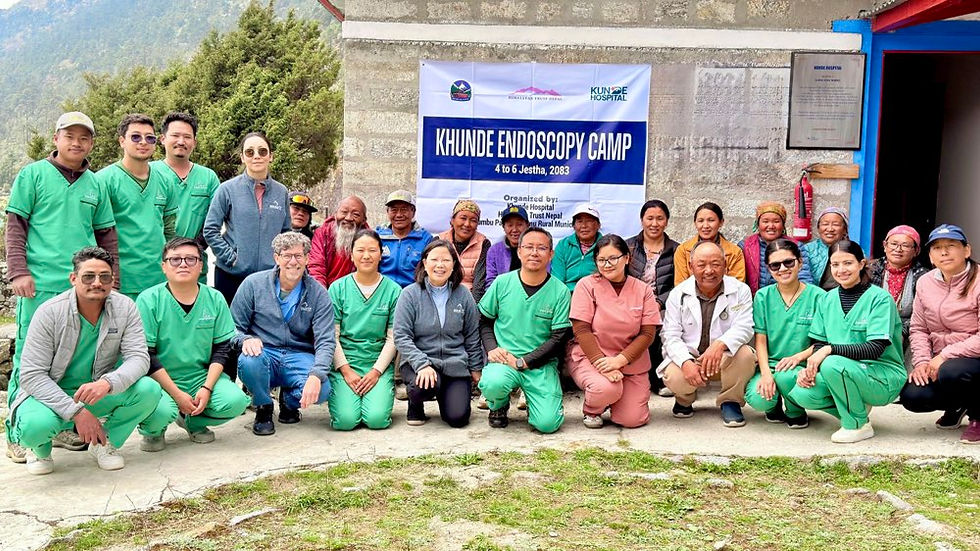
Dr Amrita Gurung (back row, fourth from left) with fellow healthcare professionals and patients at the Khunde Endoscopy Camp in Nepal.
Despite the challenges, Dr Gurung said the commitment shown by both colleagues and patients made a lasting impression.
“Despite all the challenges, the dedication of the team and the determination of patients travelling long distances for care was incredibly inspiring,” she said.
Giving back to her home country
Originally from Nepal, Dr Gurung said volunteering on the programme carried deep personal significance.
“As a Nepalese doctor working abroad, I have often felt a sense of responsibility to support communities in my home country,” she said.
“This experience gave me the opportunity to give back in a meaningful way and has strengthened my passion for volunteer work in the future.”
She added that the experience had given her an even greater appreciation for the resources available within the NHS while reinforcing the importance of early diagnosis and preventative healthcare in improving outcomes for patients.
The mission highlights how specialist expertise from Northern Ireland’s health service is helping support healthcare initiatives far beyond its own communities, while providing valuable experience that can benefit patients back home.


