


Ancient discoveries in Co Tyrone link 5,500 years of history with modern water protection

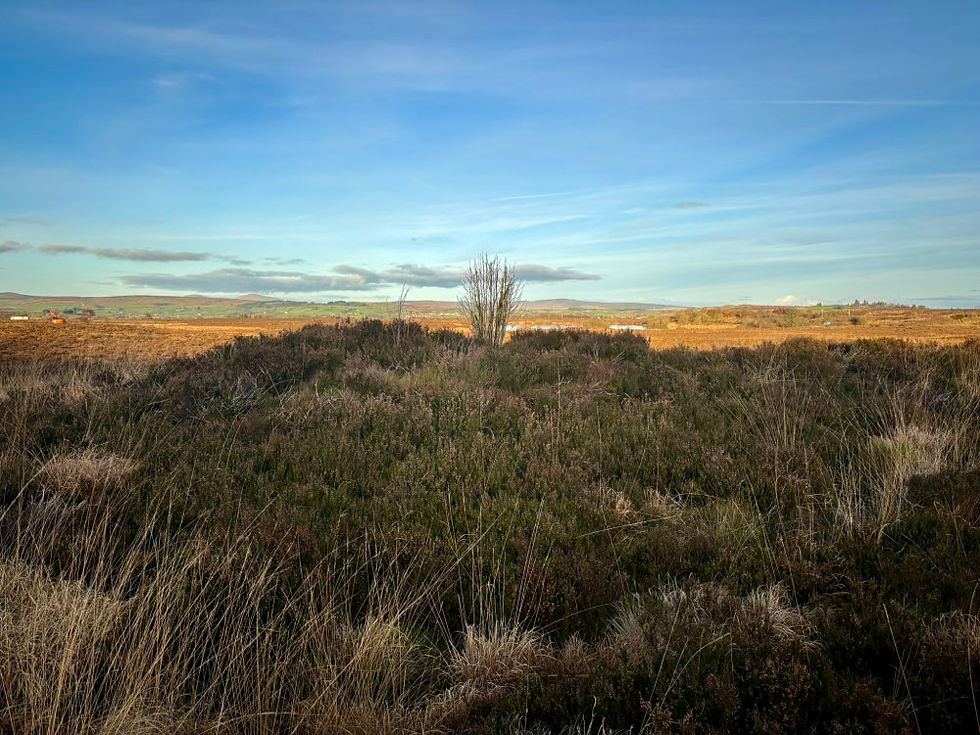
A remarkable double discovery in County Tyrone is shining new light on Ireland’s ancient past—while safeguarding its future.
Within weeks of each other, a previously unknown burial cairn dating back up to 5,000 years and a 5,500-year-old Neolithic court tomb have both been uncovered and preserved near Omagh, as part of environmental and conservation work led by NI Water and local partners.
The finds are not only archaeologically significant—they reveal how modern environmental projects are quietly uncovering—and protecting—hidden chapters of local history.
5,000-year-old burial cairn uncovered during peatland restoration

The first discovery came at The Murrins Area of Special Scientific Interest, where major peatland restoration works are underway to improve water quality in the Fane and Strule catchments.
Using specialist imaging technology ahead of groundworks, teams identified unusual subsurface structures.
A closer inspection by Ulster Wildlife and the Historic Environment Division (HED) confirmed the presence of a previously unknown Neolithic or Bronze Age burial cairn, estimated to be between 3,000 and 5,000 years old.
The cairn—found in good condition—will now be officially recorded on the Historic Environment Record of Northern Ireland.
The discovery forms part of the €7.5 million PEACEPLUS Protecting Shared Waters Project, managed by the Special EU Programmes Body, which aims to improve water quality through nature-based solutions across cross-border catchments.

Extensive work at the site has already included:
Hundreds of peat dams
Thousands of metres of peat bank reprofiling
Significant bunding to slow water flow
These interventions are designed to reduce nutrient run-off and improve the quality of raw drinking water sources.

Project Manager Diane Foster said the team was “really excited” by the unexpected archaeological find:
“We were really excited to find out that not only had we contributed to improving raw water quality, but we had also identified a bronze age cairn and are protecting important archaeological sites.”
5,500-year-old court tomb preserved through local collaboration
Meanwhile, just a short distance away, another ancient site has been carefully preserved for future generations.

The court tomb in Co Tyrone is a Neolithic stone monument featuring an open forecourt leading into roofed burial chambers.
The Ally Hill court tomb—a 5,500-year-old Neolithic monument near Lough Bradan Water Treatment Works—has undergone conservation work following concerns about overgrowth and long-term damage.
The initiative began after Drumquin Historical Society approached NI Water for support in protecting the site.
Working under archaeological guidance and in partnership with the Historic Monuments Branch and Forest Service, teams cleared encroaching vegetation and stabilised the area.

Members of the local community and members of the Drumquin Historical Society
Anthony McGirr, who led the NI Water team, described the effort:
“Under the guidance of Dr Vicki Ginn from the Historic Environment Division, our team spent the day clearing heather and cutting back branches to help protect this remarkable monument.”
He also highlighted the collaborative effort, thanking staff and contractors who supported the work.

NI Water worked closely with Historic Monuments Branch and Forest Service to obtain the required permissions for restoration at the Ally Hill site.
Seamus Gormley, Chairperson of Drumquin Historical Society, said the project will leave a lasting legacy:
“We are extremely grateful to everyone involved. This project ensures that the Ally Hill tomb will be preserved within our local landscape for generations to come.”
Where ancient heritage meets modern environmental work
The preservation of the Ally Hill tomb follows directly on from the cairn discovery at The Murrins—highlighting a striking connection between environmental restoration and archaeological discovery.
Both projects are rooted in protecting vital drinking water sources, including:
The River Strule, which flows through Omagh
The Fane River, supplying water across Armagh, Monaghan and Louth
But they are also revealing how deeply layered the landscape is—where ancient burial sites lie hidden beneath peatlands and forest growth.
A legacy for future generations

Dr Vicki Ginn from the Historic Environment Division explains the history of the tomb to the restoration team.
Together, the two sites offer a powerful reminder: efforts to restore and protect the environment are also safeguarding thousands of years of human history.
From school visits at The Murrins—where pupils from St Brigid’s Primary School have been learning about peatlands and biodiversity—to community-led conservation at Ally Hill, these projects are connecting people with both their natural and cultural heritage.
As work continues across the region, more discoveries may yet emerge—quietly linking the lives of today’s communities with those who lived here millennia ago.
At a glance
A previously unknown burial cairn (3,000–5,000 years old) has been discovered at The Murrins near Omagh
The cairn will be added to the Historic Environment Record of Northern Ireland
Discovery made during a €7.5 million PEACEPLUS water quality project
A separate 5,500-year-old Neolithic court tomb at Ally Hill has been preserved
Conservation work involved NI Water, local historians, and government bodies
Overgrowth was cleared to protect the tomb’s structure and visibility
Both sites highlight the link between environmental restoration and archaeology
Projects aim to improve drinking water quality in the Strule and Fane catchments
Community involvement includes school visits and local historical groups
Further discoveries may emerge as restoration work continues


