


‘The house was reduced to rubble’: Barr family remembers Belfast Blitz horror 85 years on


Barr’s grave in Connor New Cemetery. Alan with his father Roy and children, James and Maria
Eighty-five years after one of the darkest nights in Northern Ireland’s wartime history, Braid Ulster Unionist Councillor Alan Barr has paid a deeply personal tribute to members of his own family and to a young Ballymena police officer whose lives were lost during the Belfast Blitz.
As communities across Northern Ireland pause this week to mark the anniversary of the devastating Luftwaffe raids, Councillor Barr has reflected on the pain carried through generations by families in Ballymena and beyond — a grief rooted in loss, memory, and the enduring scars of war.
Four members of the Barr family were killed during the Easter Tuesday raid on 16 April 1941, while Constable Robert Reid, a 22-year-old from Ballymena, died in a later fire raid on 5 May 1941.
The anniversary serves as a stark reminder of the human cost of the Blitz, when homes were obliterated, families were shattered, and lives across Belfast and Northern Ireland were changed forever.
A Ballymena family destroyed in a single night
Councillor Barr said the story of his family is one shared by many Ulster families of that generation — people who left rural communities in search of work and built lives in the city, only to have them destroyed in moments.
“Like many Ulster Presbyterian families at the time, members of the Barr family left rural Kells to find work in Belfast. Among those living in Belfast were James and Jeannie Barr and their seven children,” he said.
James and Jeannie Barr had made their home at 74 York Road, beside the RUC station in Belfast.

Remembered: James and Jeannie Barr
James, aged 60, worked as an electrician at Harland and Wolff, part of the industrial backbone of wartime Belfast. His wife Jeannie, aged 64, cared for the family home. Their daughter Bessie, then in her twenties, lived with them, as did their son William, aged 32, who worked as an electrician’s helper.
When the air raid sirens sounded and the city came under attack, the family sought shelter in the most familiar and fragile of places — beneath the stairs of their home.
It was there that tragedy struck.
A German parachute mine fell outside the property and detonated with catastrophic force.
James, Jeannie and Bessie were killed instantly.
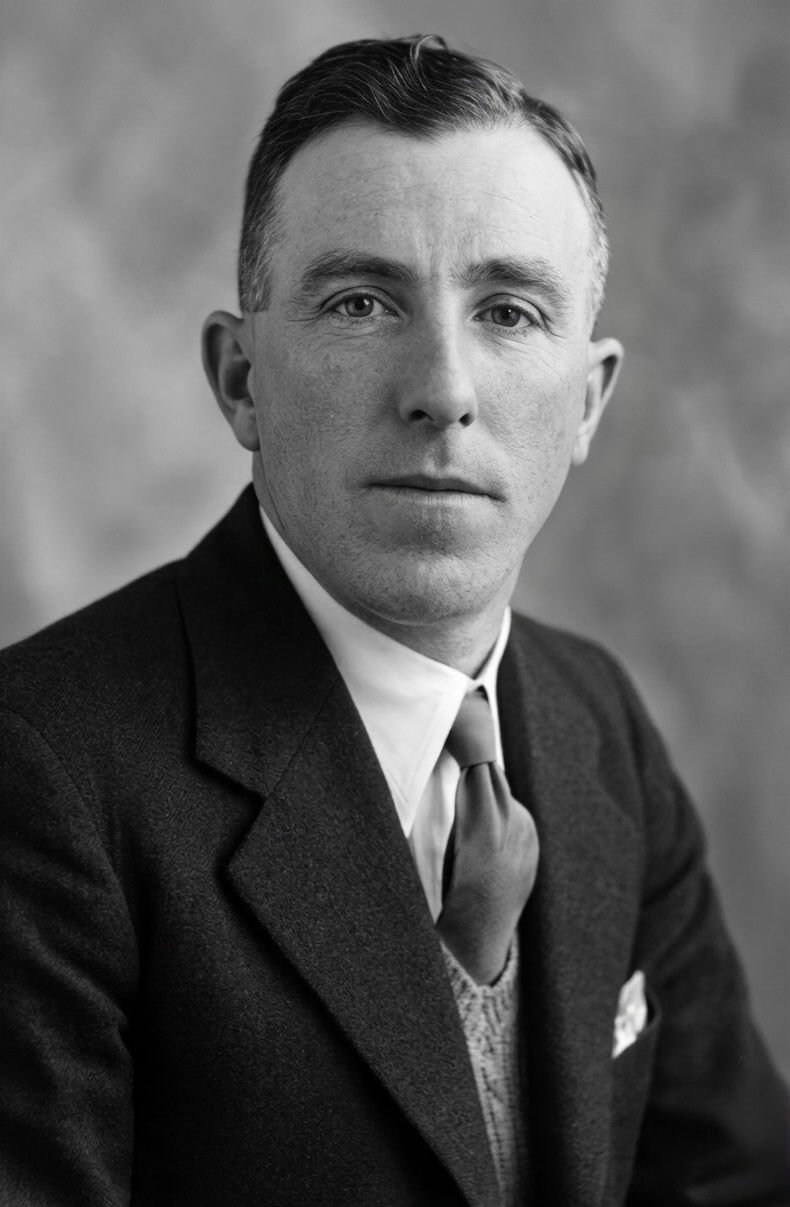
William Barr, son of James and Jeannie
William was pulled from the devastation and taken to Belfast Union Infirmary, where he later succumbed to his injuries on 21 April 1941.
In the space of one night, a family was almost entirely wiped out.
A life spared by moments

Site of Barr home on York Road, Belfast after the area had been cleared
Among the most poignant details shared by the family is the narrow escape of an infant child who, but for a last-minute decision, might also have perished.
Alistair White, a great-grandson of James and Jeannie, recalled that his great-grandmother had been caring for his mother on Easter Tuesday night.
However, with fears growing over the anticipated German bombing, his grandfather Adam came to collect the baby and bring her home.
She was only an infant.
That decision, made in the shadow of an approaching raid, is believed to have saved her life.
She could have been the fifth member of the family killed that night.

Site of Barr home on York Road, Belfast present day.
Eighty-five years later, that near miss still hangs over the family story with heartbreaking force — a reminder of how war can turn on the smallest moments.
The journey from Kells to the ruins of Belfast
Councillor Barr also spoke of the haunting memories passed down by his grandfather Bob, who recounted the night of the Blitz from the family farm outside Kells.
From there, Jim, Bob’s father, heard the unmistakable sound of Luftwaffe aircraft engines overhead.
In the distance, Belfast burned.
From the countryside, the glow of the city in flames could be seen lighting the sky.
He feared immediately for his sister Jeannie and her family.
The following morning, Alan Barr’s grandfather travelled into Belfast with Jeannie’s son Sam to search for them.
What they found was devastation.
The house had been reduced to rubble.
Later, they were directed to a mortuary, where they were forced to identify the bodies of their loved ones.
It is an image that has remained embedded in the family’s history — not only the destruction itself, but the unbearable task of recognition and farewell.
Following the funeral service, the family were laid to rest in Connor New Cemetery.
Bessie’s remains, however, were never identified.
She is believed to be buried in a mass grave for unidentified victims of the Blitz, a deeply moving detail that underscores the scale of loss suffered during the raids.
Remembering Ballymena constable Robert Reid
Councillor Barr also paid tribute to Constable Robert Reid, a young Ballymena man whose life was cut short in service during the Second World War.
Robert was the son of William John Reid and the late Maggie Reid of 32 Springwell Street, Ballymena.
He joined the Royal Ulster Constabulary in August 1939, just as Europe moved towards war.
Before entering the police service, he had worked at Wilson’s Nurseries and Braidwater Mill, both familiar names in Ballymena’s local history.
Outside of work, he was deeply involved in community life.
He led the Ballymena Accordion Band and was a member of the local Apprentice Boys of Derry.
He died on 5 May 1941, aged just 22, when Glenravel Street RUC station sustained a direct hit during the Luftwaffe raid.
Though he died in uniform, Councillor Barr noted the painful historical anomaly that has followed his memory.
Constable Reid’s name could not be added to the existing Second World War memorial because the Commonwealth War Graves Commission records him as “civilian dead”.
Despite that classification, his service and sacrifice continue to be honoured locally.
His name is preserved on a plaque in Ballymena War Memorial Park, ensuring he is not forgotten.
A legacy of remembrance 85 years on
Marking the 85th anniversary, Councillor Barr said remembrance remains vital not only for honouring those lost, but for ensuring younger generations understand the true cost of conflict.
“Although the Belfast Blitz occurred 85 years ago, we must remember the suffering and sacrifice of those who came before us so that future generations understand the horrors of war and pursue peaceful solutions to resolve disputes.”
His words land with particular poignancy this year, as families across Northern Ireland continue to carry stories of loved ones lost in the Blitz.
For Ballymena, this anniversary is not only a reflection on a historical event in Belfast — it is also a moment of local remembrance for names, families and lives rooted in this community.
Behind every date and memorial plaque are people who once walked these streets, worked in local mills and businesses, raised families, and never came home.
Eighty-five years later, their memory still speaks.
At a glance
85th anniversary of the Belfast Blitz is being marked this week
Four members of Councillor Alan Barr’s family were killed on 16 April 1941
Victims were James, Jeannie, Bessie and William Barr
The family home at 74 York Road, Belfast was destroyed by a parachute mine
William died from injuries on 21 April 1941
An infant family member narrowly escaped death after being taken home before the raid
Constable Robert Reid, aged 22, from Ballymena, died on 5 May 1941
He was killed when Glenravel Street RUC station took a direct hit
His name is remembered on a plaque in Ballymena War Memorial Park
Councillor Barr said the anniversary must help future generations understand “the horrors of war”


