‘Smoke and mirrors’: UUP MLA hits out as O’Neill joins nationalist leaders for Cardiff talks

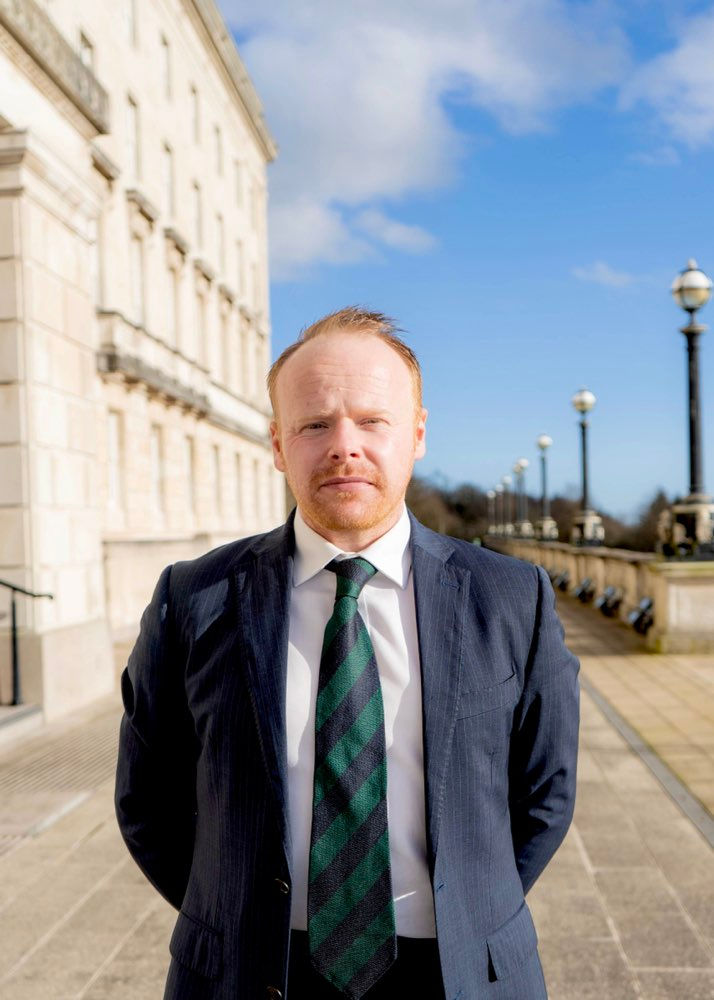
Ulster Unionist East Antrim MLA John Stewart
Ulster Unionist MLA John Stewart has accused First Minister Michelle O’Neill of engaging in “smoke and mirrors” as she joins nationalist leaders from Wales, Scotland and Ireland in Cardiff today for talks focused on greater co-operation and constitutional change.
Speaking on Sunday (August 13), the East Antrim MLA said any declaration agreed by Sinn Féin, the SNP and Plaid Cymru could not be made on behalf of Northern Ireland or its Executive, arguing that people at home instead want political leaders focused on delivering on health, housing and the economy.
O’Neill is due to join Sinn Féin President Mary Lou McDonald, SNP leader John Swinney and Plaid Cymru leader Rhun ap Iorwerth for a round-table discussion on Monday, with the parties expected to explore closer working on the economy, energy and European and international co-operation.
Leaders look towards constitutional change
The three parties say they will also call on the UK Government to prepare, plan and facilitate constitutional change in Wales, Scotland and Northern Ireland.
Ahead of the meeting, O’Neill said strengthening relationships between the parties could help create better opportunities for the people they represent, while arguing that political change was taking place across the UK and Ireland.
She said:
“Partition has failed the island of Ireland and the best interests of our people have never been served by those in Westminster.
“However, change is happening right across these islands and we must be ready for constitutional change when it comes.
“The election of three Nationalist First Ministers for the first time on these islands is a clear indication that people see that Westminster is not working for the people of the North, Scotland or Wales.
“Strengthening the relationships between the three parties and finding common ground will help us grow and create better opportunities for the workers, families and communities we represent.
“And ultimately, this will lead us towards independence and free from the shackles of Westminster.”
Sinn Féin President Mary Lou McDonald said the constitutional circumstances facing Ireland, Scotland and Wales were different and must be respected, but argued they shared a principle that nations should be able to determine their own futures.
She said:
“In Ireland, the position is clear. The Good Friday Agreement provides a peaceful and democratic pathway to reunification and guarantees the right of the people of this island to determine our constitutional future.
“No British Prime Minister can take Irish unity off the table. Ireland’s future will be decided by the people of Ireland.
“The debate on unity is already underway. A referendum on Irish unity is not something to fear. It is something to prepare for.
“That means doing the serious work now on our economy, public services, rights and institutions, and ensuring that people from every community and tradition have a real voice in shaping the future.
“Irish unity is no longer a distant aspiration. It is a serious contemporary political project, and the work of preparing for the new Ireland must happen now.”
Stewart challenges O’Neill’s authority
Responding ahead of the Cardiff meeting, Stewart questioned what authority O’Neill would have to sign any declaration in her capacity as First Minister without the involvement of deputy First Minister Emma Little-Pengelly or wider Executive agreement.
He said:
“Whatever is signed in Cardiff means absolutely nothing unless Parliament says otherwise. Sovereignty rests at Westminster, the constitution is not a devolved matter, and no memorandum signed at a press conference changes that by a single word.
“Look at what this actually is. A declaration between three party leaders. Michelle O’Neill has no authority to sign anything on behalf of Northern Ireland or this Executive without the deputy First Minister and Executive agreement, and she has not sought either.
“In Wales, Plaid Cymru runs a minority government and parties that support the Union hold a majority of seats in the Senedd. In Scotland, the SNP is a minority government. Strip away the staging and this is the SNP, Plaid Cymru and Sinn Féin saying they want out of the United Kingdom. They are entitled to say that. They are not entitled to say it in anyone’s name but their own.”
UUP renews call for joint First Ministers
Stewart also used the Cardiff meeting to renew the Ulster Unionist Party’s argument that Northern Ireland’s two top Executive positions should be renamed an Office of Joint First Ministers.
He said:
“What is sad is that it is happening in our name at all. Under the Belfast/Good Friday Agreement that people here actually voted for, the First Minister and deputy First Minister stood jointly and had to be elected by this Assembly on a cross-community vote. Neither could take office without consent from both traditions. The DUP had that torn up at St Andrews in 2006 rather than face a vote that meant endorsing a Sinn Féin partner in office. Once Sinn Féin edged ahead in 2022, the title followed automatically.
“That single change is why every election since has been turned into a sectarian headcount between the two largest parties. Voters are told to back one bloc to keep the other out of a title that carries no extra power whatsoever, and every argument about health, housing and the economy gets drowned out in the process. It is why the Ulster Unionist Party wants this reformed into an Office of Joint First Ministers, reflecting in name what the office already is in law. One office, held equally.”
‘People want delivery’
Plaid Cymru leader Rhun ap Iorwerth said the parties had “much to gain from working together” where they shared common interests, while Swinney described the meeting as taking place at a “pivotal moment of constitutional change”.
The competing statements underline the sharply different interpretations of today’s Cardiff gathering: Sinn Féin, the SNP and Plaid Cymru see closer co-operation as part of preparations for possible future constitutional change, while Stewart insists the parties cannot speak collectively for Northern Ireland, Scotland or Wales on their constitutional futures.
Concluding his criticism, the East Antrim MLA said:
“This is smoke and mirrors. Back home people want delivery. Cardiff tomorrow gives them nothing of it.”