PSNI warns “rom-com” myths masking stalking as nearly 1,000 arrests made since law change


A new Police Service of Northern Ireland (PSNI) campaign is urging the public to recognise the warning signs of stalking after nearly 1,000 arrests were made since the offence was criminalised, with officers warning that behaviours often dismissed as romantic can escalate into serious harm.
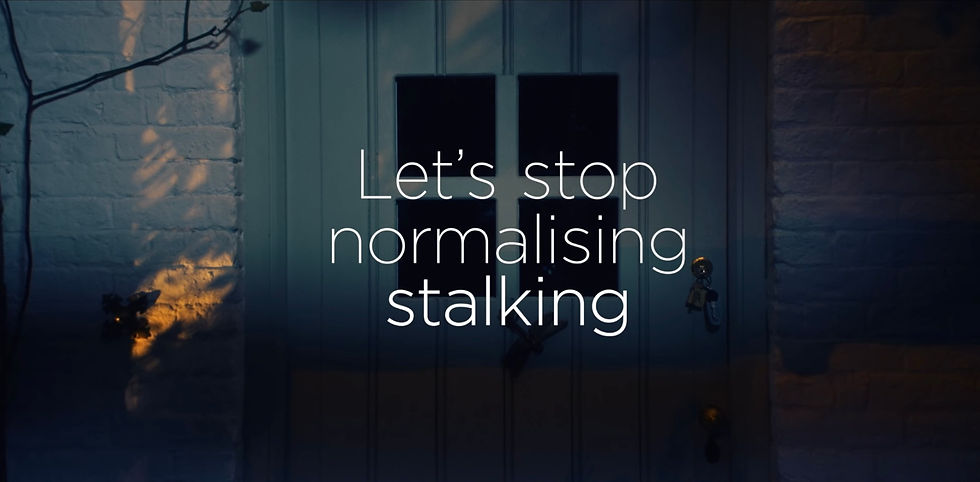
Launched to coincide with National Stalking Awareness Week (20–26 April), the campaign uses a two-minute “romantic comedy” style trailer to challenge misconceptions around stalking, highlighting how seemingly harmless actions can form part of a dangerous and escalating pattern of behaviour.
Romantic storyline flips to reveal darker reality
The short film, shared across PSNI social media channels this week, initially presents what appears to be a happy relationship. However, as the narrative unfolds, troubling behaviours emerge, intensifying after the relationship ends.
The campaign aims to expose how stalking behaviours are often misunderstood in their early stages, particularly when framed through the lens of romantic gestures commonly portrayed in films.
Originally developed by Gloucestershire Police in 2023, the concept has been adapted for a Northern Ireland audience to improve public understanding of stalking and encourage earlier reporting.
Clear definition: stalking is repeated, unwanted behaviour
Police stress that stalking is defined as a pattern of unwanted, repeated behaviour that causes fear or distress. Victims do not need to be threatened with violence for the behaviour to constitute a crime.
Officers are encouraging the public to look out for the “FOUR” warning signs:
Fixated
Obsessed
Unwanted
Repeated
When these behaviours form a pattern, individuals are advised to document incidents, keep evidence, and report concerns before escalation.
Nearly 1,000 arrests since law introduced
Stalking was criminalised in Northern Ireland in April 2022. Since then, up to 31 March 2026, the PSNI has recorded:
945 arrests for stalking
491 charges brought
Since October 2023, police have also secured four Stalking Protection Orders, which can impose restrictions on alleged perpetrators, including blocking contact, creating exclusion zones, and limiting online activity related to victims.
Officers say further training and guidance is being rolled out to increase the use of these protective measures.
“An insidious crime that destroys lives”
Detective Superintendent Kerry Brennan said the campaign is focused on breaking down dangerous misconceptions about stalking.
“With this campaign we are asking the public again to not ignore the red flags. If someone’s behaviour towards you is fixated, obsessive, unwanted and repeated, this is stalking.
“I think many people when they hear the word ‘stalking’ will think of someone lurking in the shadows. Stalking can actually take many forms and can be online as well as in person and could be someone known to you or a complete stranger.
“It is an insidious crime that takes over and destroys lives, it is not the rom com love story that people think it is. ‘They left flowers at my door again’ – this is sometimes not an act of kindness but more a warning sign of unhealthy obsession.
“Statistics show that people will suffer up to 100 incidents before reporting to Police. It often results in fear, trauma and a reduction in the victim’s quality of life, in some tragic cases it has resulted in murder.
“Stalking is a crime, which will not be tolerated or accepted within our communities. Thousands of our officers and staff have now been trained to recognise and respond to these crimes and we will continue to use every tool at our disposal to bring offenders to justice.
“Our advice is if you are experiencing the behaviour highlighted in the campaign to keep a log of everything, regardless of how small you feel it may be, and contact the police.
“There are a range of things we can do in order to disrupt the person’s behaviour, such as Stalking Protections Orders, which for example can block contact or attempts to make contact, create exclusion zones or order people to not post on social media with reference to a victim. A breach is a criminal offence, and these are tools available to us to manage perpetrators.”
Warning signs often dismissed as harmless

Police say early-stage stalking behaviours are frequently misinterpreted as normal or even flattering, particularly when viewed in isolation.
Examples of stalking behaviours include:
Persistent phone calls, messages, or social media contact
Unwanted gifts or items left at a person’s home
Turning up uninvited at home or work
Monitoring movements or frequenting known locations
Contacting friends, family, or colleagues to gather information
Verbal abuse, humiliation, or spreading rumours
Hacking social media or email accounts
Threats against victims, loved ones, or pets
Identity theft or financial abuse
Installing spyware or tracking devices
More extreme behaviours can involve moving into the same area, applying for jobs in the same workplace, or deliberately embedding themselves into a victim’s social or professional circles.
Push for earlier reporting as delays persist

Police data indicates victims can experience up to 100 incidents before reporting stalking to authorities, often after prolonged distress.
The PSNI is using the campaign to encourage earlier intervention, emphasising that documenting behaviour — no matter how minor it may seem — can be crucial in building evidence and securing protection.
Support is available through police channels, while the National Stalking Helpline (Tel. 0808 802 0300) also offers confidential advice for those unsure whether they are experiencing stalking.
Emergency situations should be reported via 999.
At a glance
PSNI launches “rom-com” style campaign to highlight stalking behaviours
Campaign coincides with National Stalking Awareness Week (20–26 April)
945 arrests and 491 charges recorded since stalking became a crime in April 2022
Four Stalking Protection Orders secured since October 2023
Victims can experience up to 100 incidents before reporting
Police warn early behaviours are often misread as romantic gestures
“FOUR” warning signs: Fixated, Obsessed, Unwanted, Repeated
Stalking can occur online or in person, involving known individuals or strangers
New training aims to increase use of protective legal measures
Public urged to document incidents and report concerns early