


Almost one in four children in poverty in NI miss out on free school meals, research finds


Thursday 5 November 2026
Almost one in four children living in poverty in Northern Ireland are not eligible for free school meals, according to major new UK-wide research highlighting significant inequalities in the financial support available to struggling families.
The findings, published today (Thursday 5 November), reveal that 24% of children in poverty in Northern Ireland fall outside free school meal eligibility, compared with 17% in Scotland and 18% in Wales.
Following England's expansion of eligibility to children in families receiving Universal Credit, researchers estimate that Northern Ireland has the highest proportion of children in poverty excluded from free school meals among the four UK nations.
The study, funded by the Nuffield Foundation and involving researchers from Ulster University, warns that families facing similar financial difficulties can receive substantially different levels of support depending on where they live.
Why free school meal eligibility matters for families
In Northern Ireland, families receiving Universal Credit generally qualify for free school meals only if their annual net household earnings do not exceed £15,900. England has removed the equivalent earnings threshold for families receiving Universal Credit, extending eligibility regardless of earnings.
The research estimates that free school meals can be worth approximately £1,000 annually to a family with two children, making eligibility particularly important for households struggling with food bills and other essential costs.
The figures are based on calculations by the Child Poverty Action Group using household income data from 2021–22 to 2023–24 alongside administrative free school meal records.
Researchers acknowledge that England's expanded eligibility does not cover every child in poverty, including some children whose families cannot access Universal Credit or public funds. Data limitations mean the precise number excluded in those circumstances cannot be established.
Nevertheless, the findings identify a substantial difference in access to support between Northern Ireland and other parts of the UK, with implications for families in Ballymena, Mid and East Antrim and communities across the province.
Stormont's anti-poverty strategy faces further scrutiny
The findings also raise questions about Northern Ireland's wider approach to tackling poverty, with a replacement anti-poverty strategy still awaiting final approval.
Northern Ireland's previous Child Poverty Strategy ended in 2022 without specific poverty-reduction targets. Consultation on a new anti-poverty strategy closed in September 2025, but a replacement has yet to be finalised.
In September, Communities Minister Gordon Lyons said he intended to bring a revised strategy and accompanying action plan to Executive colleagues before the end of 2026. The Department subsequently identified March 2027 as an indicative publication date, subject to Executive approval.
By contrast, Scotland has legally established targets to reduce relative child poverty below 10% by 2030, alongside measures addressing absolute poverty, material deprivation and persistent poverty.
The researchers argue that clear targets and accountability are important because responsibility for tackling poverty is divided between different levels of government, making it harder to establish who is responsible when families continue to struggle.
Scotland provides additional payments to low-income families
The report, titled The State's Existing Wiring Re-examined: Cost of Living, Child Poverty and Devolution, examines how decisions made by governments across the UK affect household incomes and the cost of essential services.
One of the clearest examples is the Scottish Child Payment, which provides £28.20 per child each week to qualifying low-income households receiving Universal Credit.
For a family with two eligible children, that represents £56.40 a week, or £2,932.80 over a full year. Northern Ireland does not operate an equivalent payment.
The report cites Scottish Government projections suggesting that its combined policies will reduce relative child poverty by 10 percentage points in 2026–27 compared with what would be expected without those interventions. Approximately half of that projected effect is attributed to the Scottish Child Payment.
Although Northern Ireland has extensive legislative powers over social security, it generally maintains parity with the benefits system in Great Britain. The Executive can introduce additional protections and discretionary support, but decisions about doing so also depend on available funding.
Ulster University researcher warns of winners and losers
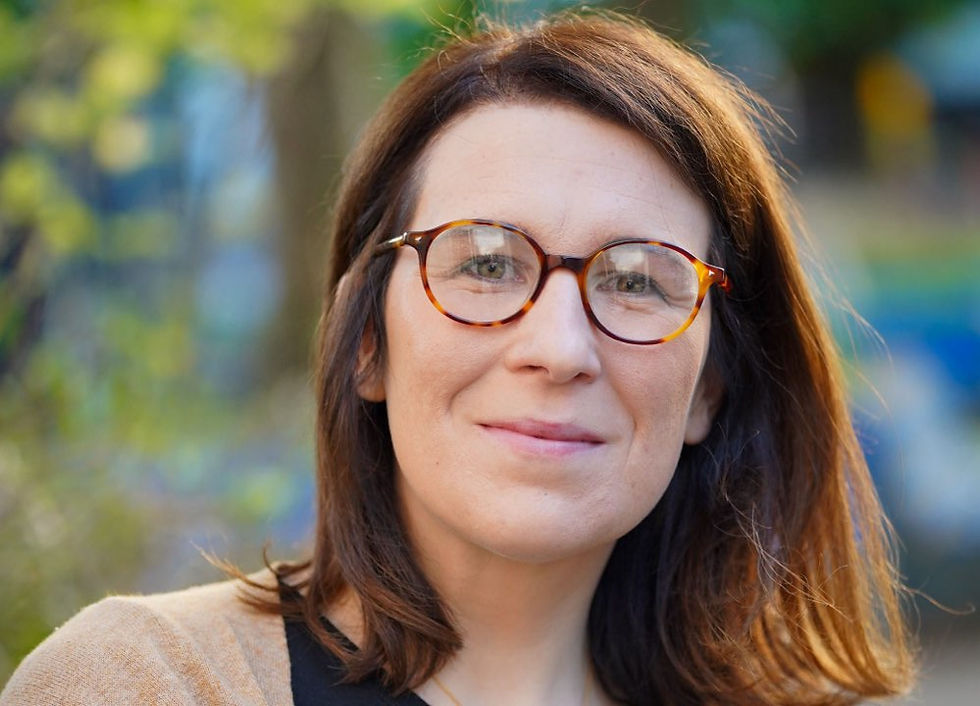
Dr Ciara Fitzpatrick, Senior Lecturer in Law and Co-Investigator on the Nuffield Foundation-funded programme
Northern Ireland's contribution to the Safety Nets research programme was led by Ulster University, with researchers examining the consequences of devolved decision-making for families receiving social security.
Dr Ciara Fitzpatrick, Senior Lecturer in Law and Co-Investigator on the Nuffield Foundation-funded programme, warned that transferring powers between governments does not automatically produce fairer outcomes.
She said:
“Devolution creates both winners and losers and it's imperative that the current Government does not view devolution as a panacea in its efforts to create thriving, prosperous communities.”
The research found that localised welfare arrangements can create substantial differences in the help available to families, even when their financial circumstances are similar.
It also highlights the contrast between Northern Ireland and Scotland, where devolved powers have been used to provide additional income support to qualifying households.
Families question fairness of postcode differences
The Safety Nets programme brought together parents and carers from England, Scotland, Wales and Northern Ireland to examine their experiences of social security and attitudes towards differences between nations.
Researchers found that many participants were initially unaware that eligibility for benefits and other support could vary considerably depending on where they lived. Once those differences were explained, participants frequently questioned whether the arrangements were fair.
Zahida Purves, a parent involved in the research, said:
“We are one nation but all treated differently. This research shows that support is neither fair, equal or sufficient.”
She added:
“We want a compassionate system that's rooted in adequacy, is an investment in people, and gives a secure foundation to build a positive future, something all our wellbeing depends on.”
The research also identified barriers including complicated applications, limited awareness of available assistance, digital exclusion and the stigma associated with seeking financial help.
Researchers call for minimum standards across the UK
The Safety Nets programme brings together eight universities, the Resolution Foundation, Child Poverty Action Group and parents with lived experience of the social security system.
Its latest briefing makes five recommendations for governments considering further devolution of welfare responsibilities:
• Establish a clear UK-wide minimum standard of support, while allowing devolved and local governments to provide additional assistance.
• Ensure adequate, predictable funding accompanies responsibility for delivering services.
• Protect essential entitlements while allowing flexibility for discretionary support.
• Involve families with direct experience of social security in designing policies and services.
• Assess whether support improves household finances, accessibility and dignity, rather than measuring success through spending and caseload figures alone.
Professor Ruth Patrick, Project Lead for Safety Nets at the University of Glasgow, said the UK Government must learn from existing arrangements before transferring further powers.
She warned:
“The UK Government must learn from both the strengths and fault lines of existing devolution. Burnham wants to rewire the state, but unless he tests the existing wiring, his project risks failure.”
How families can check free school meal eligibility
Parents and carers in Northern Ireland can check eligibility and apply for free school meals through the Education Authority, which also administers school uniform grants for qualifying families.
Applications can be made online at:
Eligibility depends on household circumstances and qualifying benefits, and families should consult the Education Authority's current guidance before applying.
Questions remain over support for Northern Ireland children
The findings come amid continuing pressure on household budgets, with the research highlighting how eligibility rules and government policy can determine whether families receive assistance with everyday essentials.
For Northern Ireland, the immediate questions concern whether free school meal eligibility will be widened, what commitments the forthcoming anti-poverty strategy will contain, and how the Executive intends to measure progress in reducing child poverty.
With the anti-poverty strategy expected to reach Executive colleagues before the end of the year and publication provisionally indicated for March 2027, attention will now turn to whether those commitments translate into measurable improvements for families — and whether children currently excluded from free school meal support will see any change.


