


Northern Ireland records 560 email and social media hacks as police urge public to strengthen account security

Saturday 03 October 2026
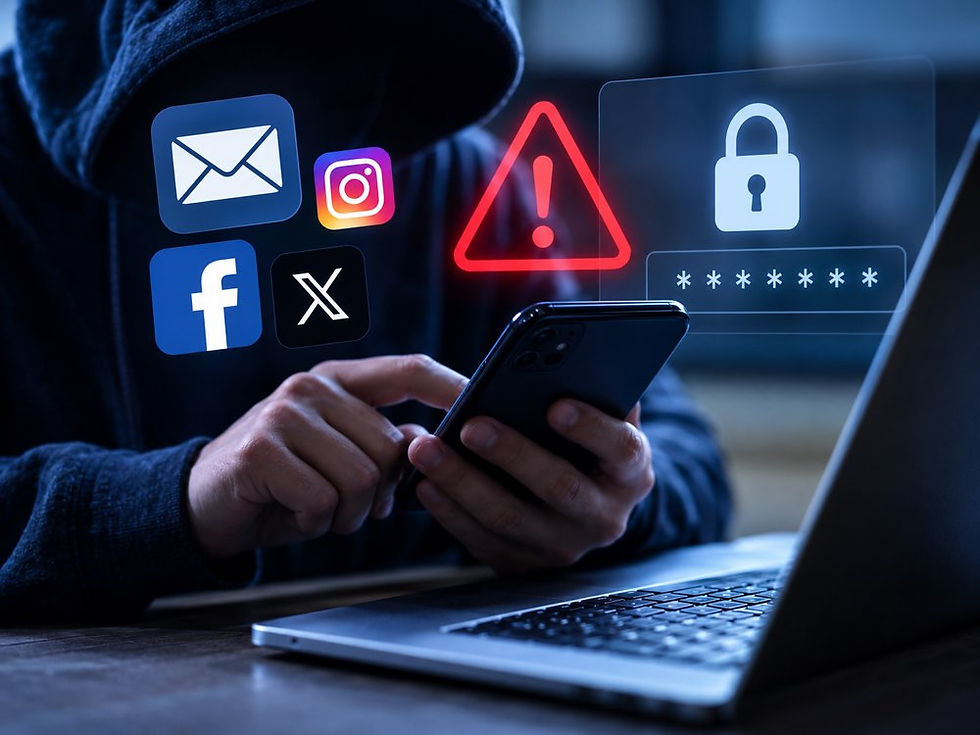
There were 560 reports of social media and email account hacking in Northern Ireland during the 2025/26 financial year, as police urge people to take simple steps to stop criminals gaining access to their digital lives.
Police say compromised accounts can give fraudsters access to personal information and trusted networks of family and friends, allowing them to impersonate victims and ask contacts for money or promote bogus offers.
Detective Inspector Darren McCracken of the Police Service of Northern Ireland said the consequences of losing control of an account can be devastating.
“Your email and social media accounts hold the keys to your personal life and when hackers compromise them, the fallout can be devastating. My message to the public is to protect your identity and digital footprint by taking immediate action: use passkeys, use strong passwords, and enable two factor authentication where possible. A few simple changes today can help prevent becoming a victim tomorrow.”
Millions stolen through hacked accounts
Across the UK, reported sums stolen through email and social media account hacking reached £6.3 million in 2025/26, up from £1.2 million the previous year — an increase of 417%.
The number of reports also increased by 34% year on year. Other reported incidents involved criminals taking control of gaming and streaming accounts, as well as travel and online delivery accounts.
One of the most common patterns identified is criminals using a compromised account to impersonate someone known to the victim’s contacts. This can make requests for money, fake ticket offers or other scams appear more convincing because they come from a trusted account.
Public urged to switch to passkeys
Report Fraud is preparing to launch an awareness campaign on Monday 5 October as part of Cybersecurity Awareness Month, encouraging people to switch to passkeys where available and strengthen the security of their accounts.
Passkeys allow users to sign in without a traditional password and are designed to offer greater protection against phishing and stolen login credentials. Where passkeys are unavailable, people are advised to use strong, unique passwords — ideally generated by a password manager — and enable two-step verification.
Chief Superintendent Amanda Wolf, Head of Report Fraud Operations, said:
“For most people, being hacked isn’t just a cyber issue, it’s personal. It can leave victims locked out of important accounts, worried about what information has been accessed, and concerned that criminals may use their identity to target others.
“What starts with one compromised account can quickly impact family, friends and colleagues as fraudsters exploit trusted relationships to commit further fraud.
“The good news is that there are simple steps people can take to protect themselves. Switching to passkeys and enabling two-step verification adds a strong extra layer of security and makes it much harder for criminals to gain access to your accounts.”
How to make your accounts safer
People are being advised to use passkeys wherever available and, where they are not offered, choose strong passwords and activate two-step verification.
Privacy settings should also be checked so posts and personal information are visible only to the intended audience. Details such as birthdays, home locations, family relationships and pet names can potentially help criminals build a picture of someone or make an attempted fraud more convincing.
Anyone receiving an unexpected request through social media or email from somebody they know should not automatically assume the message is genuine. Verify it independently by phoning the person, sending an SMS or speaking to them in person.
Jonathon Ellison, Director for National Resilience at the National Cyber Security Centre, said:
“We know that most cyber harm to individuals starts with criminals attempting to steal login details, which is why we strongly encourage users to choose passkeys where they are available across digital services and use two-step verification where they aren’t.
“Passkeys are simpler, faster and more secure to use, raising our national resilience against phishing attacks whilst leaving password headaches behind.”
What to do if your account is hacked
Anyone who has already had an account compromised can report it to Report Fraud at reportfraud.police.uk or by calling 0300 123 2040.
In Northern Ireland, incidents can alternatively be reported to the PSNI online at www.psni.police.uk/report or by calling 101. In an emergency, call 999.
The National Cyber Security Centre also provides guidance on limiting the damage and recovering access to compromised accounts at www.ncsc.gov.uk/guidance/recovering-a-hacked-account.
With hundreds of incidents reported in Northern Ireland alone last year, the message from police is to strengthen accounts before criminals get the opportunity to exploit them — particularly accounts containing personal information or providing access to trusted friends and family.


