


Dollaghan return to spawn in Glenwherry River following major habitat restoration project

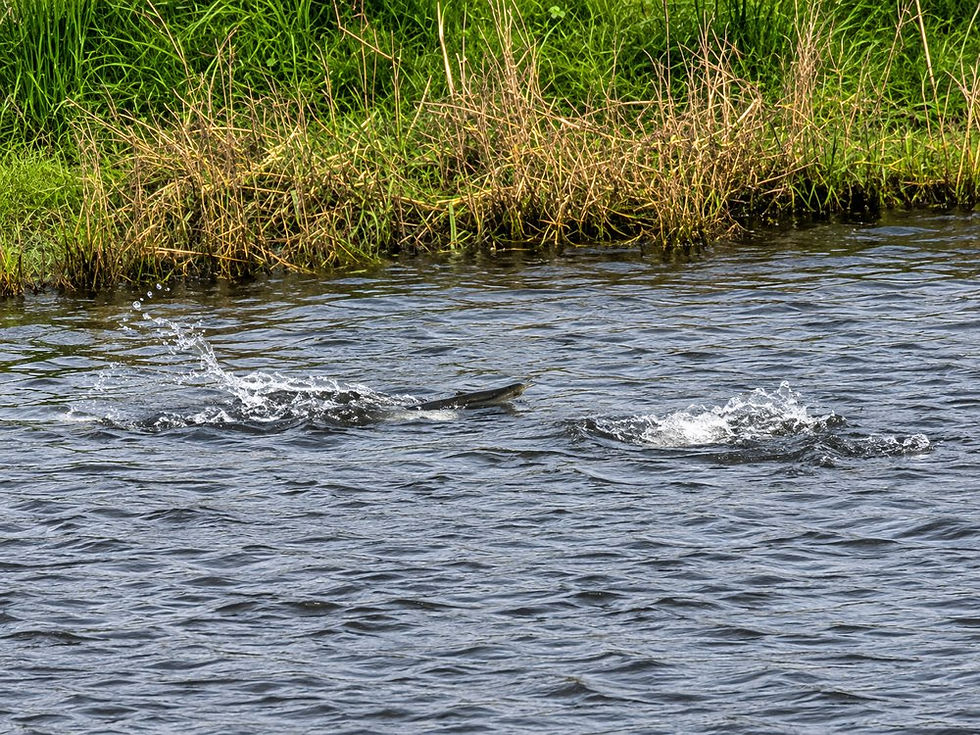
The efforts of volunteers from Kells, Connor and Glenwherry Angling Club have been rewarded with the recent arrival of the Dollaghan Trout who have been spawning in the Glenwherry River.
Wednesday 11 November 2026
Dollaghan trout have been filmed spawning on a restored stretch of the Glenwherry River, providing an encouraging early result for a major conservation project undertaken by local volunteers to improve breeding conditions for one of Lough Neagh’s distinctive native fish populations.
The footage, captured in the river’s headwaters, shows the fish using spawning gravel introduced during 2025 habitat improvement works by Kells, Connor and Glenwherry Angling Club, with support from the Department of Agriculture, Environment and Rural Affairs (DAERA).
Around 80 tonnes of gravel were placed along a stretch of river previously considered unsuitable for Dollaghan spawning, creating conditions intended to encourage the fish to reproduce naturally.
The discovery offers a welcome boost for volunteers working to protect native trout populations amid wider concerns about declining fish stocks across the Lough Neagh catchment.
Volunteers see encouraging results from restoration work

(L-R): Gareth Cooper, River Enhancement Officer, Warren Campbell, Senior Fisheries Officer Inland Fisheries, and Club Member William McClean.
Gareth Cooper, River Enhancement Officer with Kells, Connor and Glenwherry Angling Club, welcomed the footage as evidence that the restored habitat is being used by spawning fish.
"It's fantastic to see Dollaghan using the spawning gravel we introduced during our 2025 habitat restoration works. This is exactly what we hoped to achieve when undertaking these improvements."
The project involved introducing suitable spawning material to a section of the Glenwherry River where the existing riverbed had not provided appropriate conditions for Dollaghan to lay their eggs.
The footage confirms that fish are using the newly installed gravel, although the longer-term success of the restoration will depend on whether eggs survive, young fish emerge and juvenile populations become established.
Footage captures an important stage in the Dollaghan life cycle
The video shows female trout using powerful movements of their tails to disturb and rearrange the gravel on the riverbed.
This behaviour creates a shallow depression, known as a spawning redd, into which eggs are deposited and fertilised by male fish. The eggs are then covered with gravel, helping to protect them while allowing oxygen-rich water to circulate.
Dollaghan are a distinctive form of migratory brown trout associated with Lough Neagh. They spend much of their lives in the lough before travelling upstream into tributary rivers, including the Kells water system, to reproduce.
After hatching, the young fish initially remain within the gravel as alevins, drawing nourishment from their yolk sacs. They subsequently emerge as fry, develop into juvenile trout and eventually migrate downstream towards Lough Neagh, where they continue to mature.
Suitable spawning gravel is therefore an important part of the species’ life cycle, providing the conditions needed for eggs to develop and young fish to begin their lives.
Further improvements planned to protect river habitats

Work undertaken by angling club volunteers over the last year to improve the breeding habitat for the Dollaghan Trout in Glenwherry River
The encouraging footage follows a programme of practical conservation work undertaken by the club’s River Enhancement team, whose members dedicate time to improving the local river environment.
Alongside the installation of spawning gravel, the club’s wider programme includes improvements designed to protect riverbanks, reduce pressures on water quality and support healthier habitats.
The work includes:
• Installing suitable spawning gravel to improve breeding opportunities for native fish.
• Undertaking river habitat improvements to support aquatic wildlife.
• Erecting stock-proof fencing to help protect sensitive river areas from livestock.
• Planting native trees to improve the surrounding river environment.
The club hopes that further improvements undertaken this year will produce similarly encouraging results in future spawning seasons.
However, the appearance of spawning fish is an early indicator of habitat use rather than confirmation that the project has increased the overall Dollaghan population.
Conservation efforts amid wider concerns for native fish
The development comes against a backdrop of concern among local anglers about the future of Dollaghan trout and Atlantic salmon in the Kellswater river system.
The club has previously criticised DAERA Inland Fisheries over the refusal of Section 14 permit applications that would have allowed it to collect fish for hatchery breeding and release, including a proposed educational project involving local schoolchildren.
At the time, DAERA said scientific advice indicated that stocking fish did not effectively increase populations or resolve underlying problems such as poor habitat and water quality.
The Department said its approach was instead focused on identifying and addressing the causes affecting wild fish populations, alongside scientific monitoring and practical habitat restoration.
In its earlier response, DAERA also confirmed that it had placed 100 tonnes of spawning gravel in the river during the year and was supporting research into fish survival. That work should not be confused with the club’s separate account of the 80 tonnes installed during its 2025 restoration project.
The latest footage provides a positive example of the habitat-based conservation work being undertaken locally, even as differences remain over the potential role of hatchery breeding in protecting declining fish populations.
Partnership support helps deliver river improvements

Caught: club member, Anthony Brown, with a Dollaghan Trout
Kells, Connor and Glenwherry Angling Club acknowledged the contribution of organisations that have supported its river enhancement programme.
These include the Northern Ireland Environment Agency’s Water Quality Improvement Scheme, funded through the Plastic Bag Levy Fund, alongside Live Here Love Here and RiverRidge Recycling, in association with the Community Foundation for Northern Ireland.
The club also expressed particular appreciation to DAERA Inland Fisheries for its help, guidance and continued support throughout the habitat improvement project.
Members highlighted the contribution of the club’s volunteers, whose practical work has helped deliver improvements to the river environment.
Public urged to avoid disturbing spawning fish

Club member Jonny Hanna after landing a Dollaghan Trout
With the brown trout fishing season now closed, the club is reminding people that spawning fish and their nesting areas are particularly vulnerable to disturbance.
Walking through spawning areas or disturbing the gravel can damage redds and threaten the survival of developing eggs.
The club has stressed that special permission is required to access and observe spawning fish and is asking people to respect sensitive areas while the breeding season continues.
For the volunteers who installed the gravel, seeing Dollaghan return to use the restored riverbed represents an important early reward for their efforts. The next measure of success will be whether those spawning attempts produce young fish capable of sustaining future generations.
For now, the footage offers something tangible: native trout using habitat that local volunteers worked to restore, demonstrating the value of protecting the rivers on which Lough Neagh’s fish populations depend.


